Every return visit had a different purpose

Product Designer · 2025 - 2026
Pre-tournament to post-final · 26.8% opened the Featured tab · 56% engaged with Team Spotlight

iOSAndroidWeb
My scope
Tournament hub from build-up to post-final
Team
Product, Research, Engineering and UX Writing
Constraint
A fixed live-event deadline across three platforms
Outcome
26.8% Featured adoption · 56% Team Spotlight engagement

As the product designer in a cross-functional team, I worked across the tournament journey - from early exploration and iteration to shipped experiences across iOS, Android and web.

Tournament context, nearby matches, personalised content and knockout progression came together inside one evolving hub across iOS, Android and web.

We explored several directions before arriving at a focused My National Team experience and a compact bracket that remained readable on mobile.

Key decisionMake the tournament hub useful before, during and after each fan's most important match.

The hub across the tournament: schedule, national team, bracket and the final.

02 - Challenge

Designing for a tournament that changes every day.

Every match changed the competition and what fans cared about. The challenge was building a hub that stayed relevant from the build-up through the final and beyond.

Fans shaped the answer. Our UX researcher led the studies and I designed the versions we tested: a survey of 568 fans, feedback from EURO 2024, and several rounds of usability and preference tests.

fans surveyed on what they want from a World Cup
EURO 2024 users whose feedback shaped the knockout stage
of test participants described the hub as informative

03 - Decisions

01 · Build on familiarity

The World Cup did not need an entirely new product.

The context. Sofascore already had tournament hubs for competitions such as EURO and AFCON. Users understood their structure, navigation and core behaviours.

The decision. Instead of redesigning what already worked, I evolved that foundation and focused the design effort on the areas where the FIFA World Cup introduced genuinely different needs.
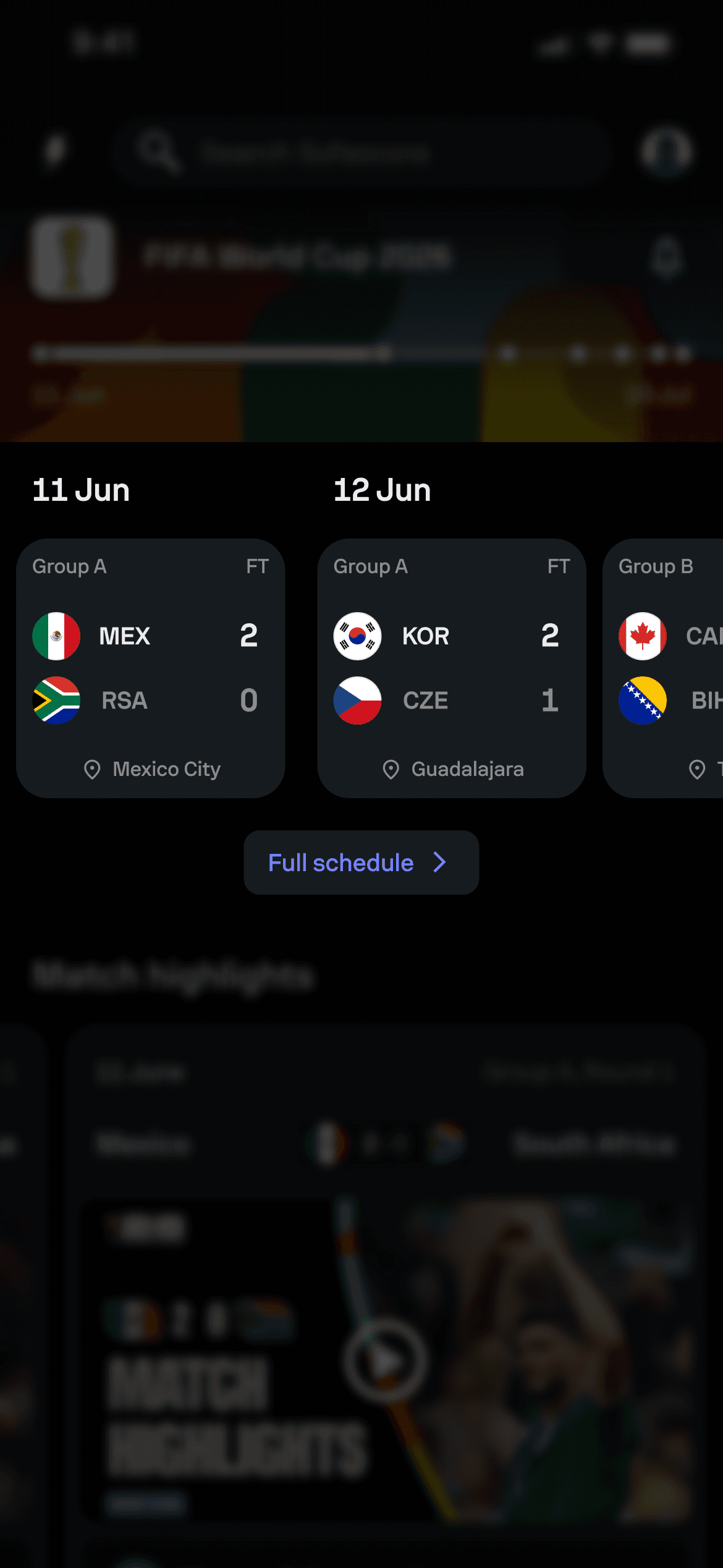
FIFA World Cup schedule and tournament orientation screen.

A familiar foundation led to a different information architecture.

Following their national team ranked second of everything fans wanted to do, and the strongest finding in testing was that the team section should sit higher on the screen.

Separating Tournament and My National Team created a clearer hierarchy and gave personalised content room to become useful.

01 / 03

In testing, fans often scrolled past a banner inviting them to pick a team, but noticed a skeleton preview of the section straight away. The skeleton shipped.

Key takeawayThe key change was not adding another feature. It was deciding which content belonged to the tournament and which belonged to the fan.

02 · Stay relevant

Stay relevant as the tournament moved.

The context. As the tournament progressed, matches changed what fans cared about. The experience needed to continuously bring the current tournament moment to the surface.

The decision. The timeline provided context, the daily schedule focused attention on nearby matches, My National Team gave fans a personalised entry point and the bracket made the path towards the final easier to understand.

FIFA World Cup hub showing the Yesterday, Today and Tomorrow schedule.
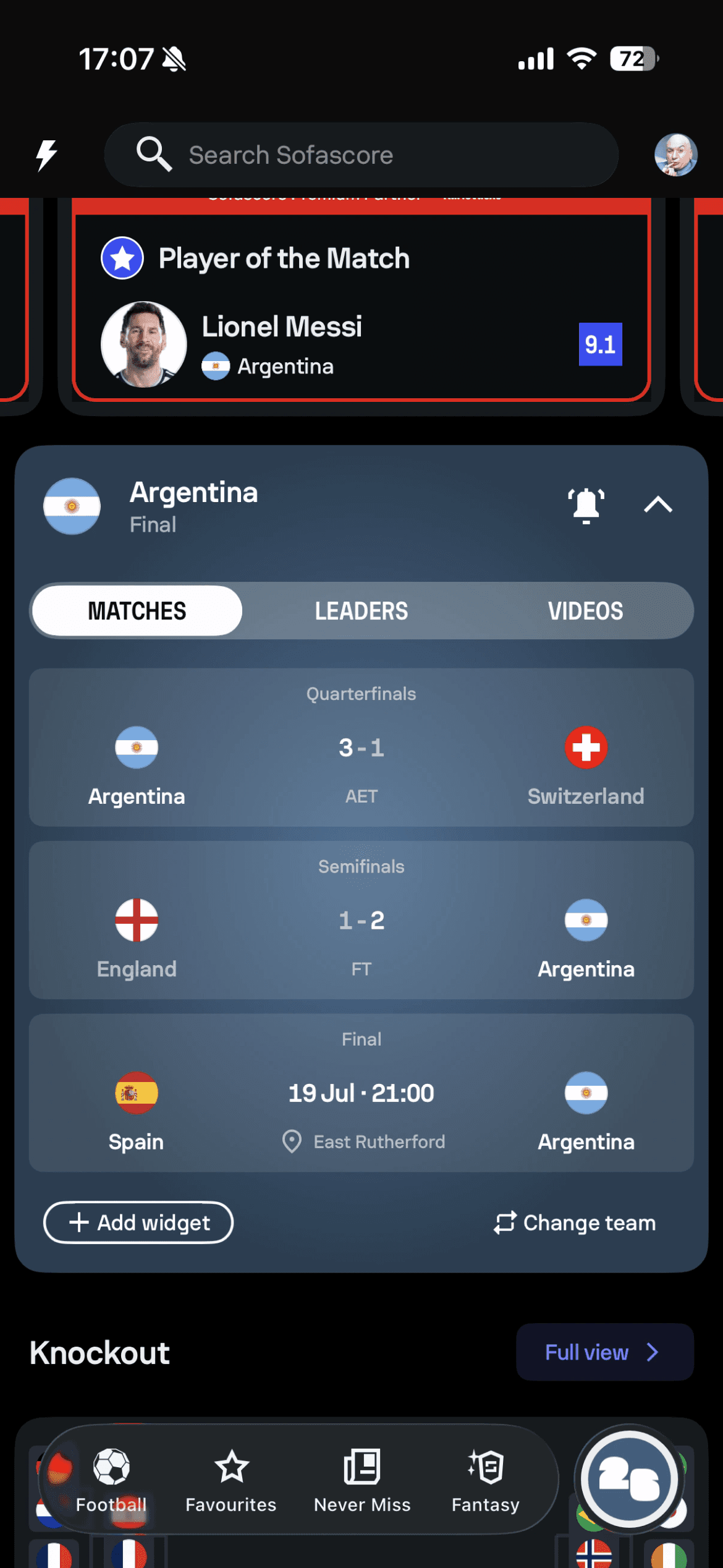
My National Team area inside the FIFA World Cup experience.
FIFA World Cup hub showing tournament progression and knockout context.
01 / 03

Product principleThe experience balanced what mattered now, what mattered personally and where the tournament was heading.

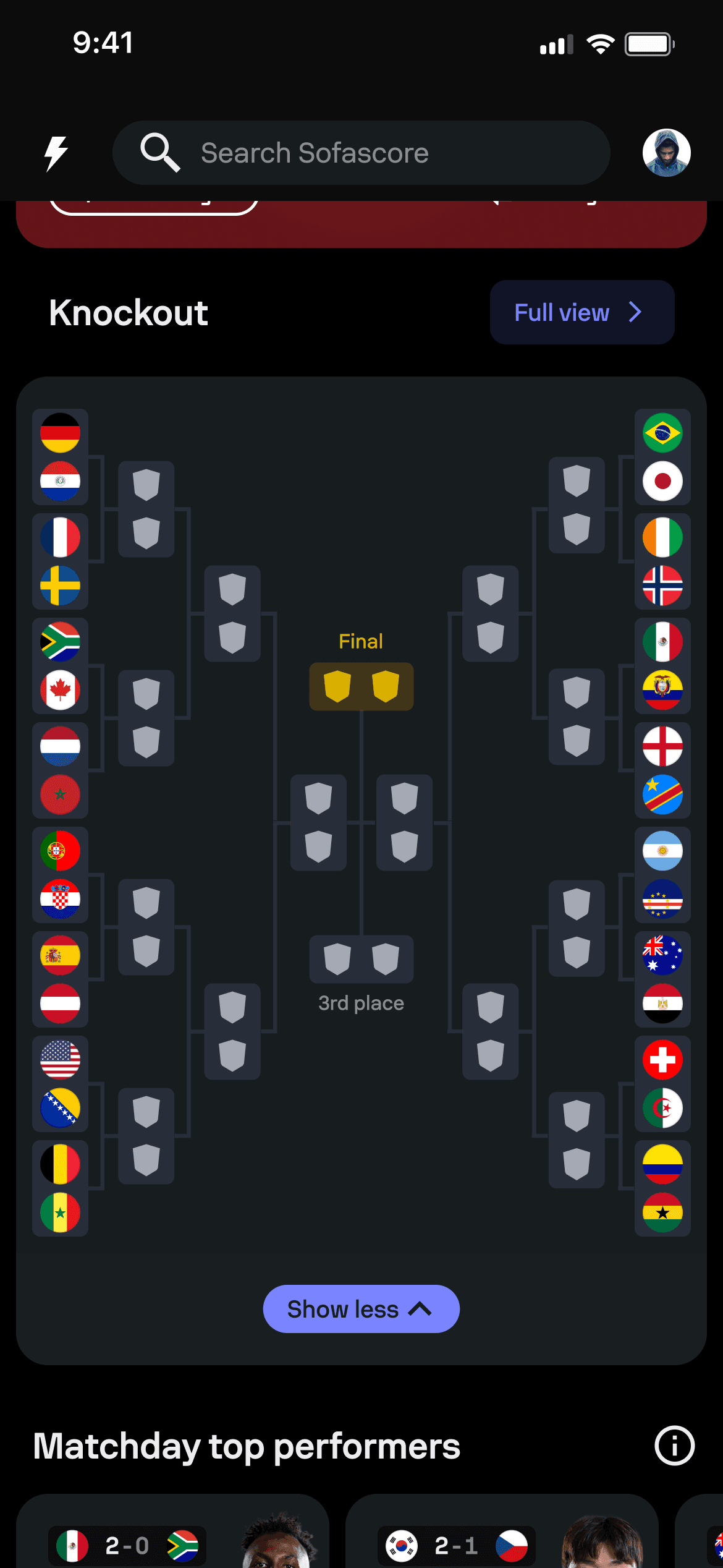
The Round of 32 changed the scale of the bracket.

The expanded tournament introduced more teams, more rounds and significantly more information than previous formats. A complete bracket could no longer be reduced to a single dense mobile view without compromising legibility.

EURO 2024 feedback asked for a bracket that shows progression and reads more easily. In testing, the leading directions performed similarly, so we shipped the newer compact view with a dedicated full view, to learn how it held up in the expanded format.

01 / 04

Full-bracket explorations led to a compact in-hub solution supported by a dedicated detailed view.

Key takeawayThe winning solution separated overview from detail: enough progression in the hub to stay oriented, and the full bracket only when users chose to explore it.

03 · Keep it focused

Every feature had to earn its place.

The context. Designing for a live tournament meant balancing user value, implementation effort and fixed delivery deadlines across iOS, Android and web.

The decision. The survey gave us a ranking to say no with. The lowest-ranked needs, such as community features and trend tracking, stayed outside the critical path.

Shipping the right product mattered more than shipping every idea.

FIFA World Cup knockout bracket in Sofascore.

04 - Guided flow

One destination brought the current tournament moment to the surface.

The hub connected the daily schedule, personalisation and knockout progression inside one continuous experience.

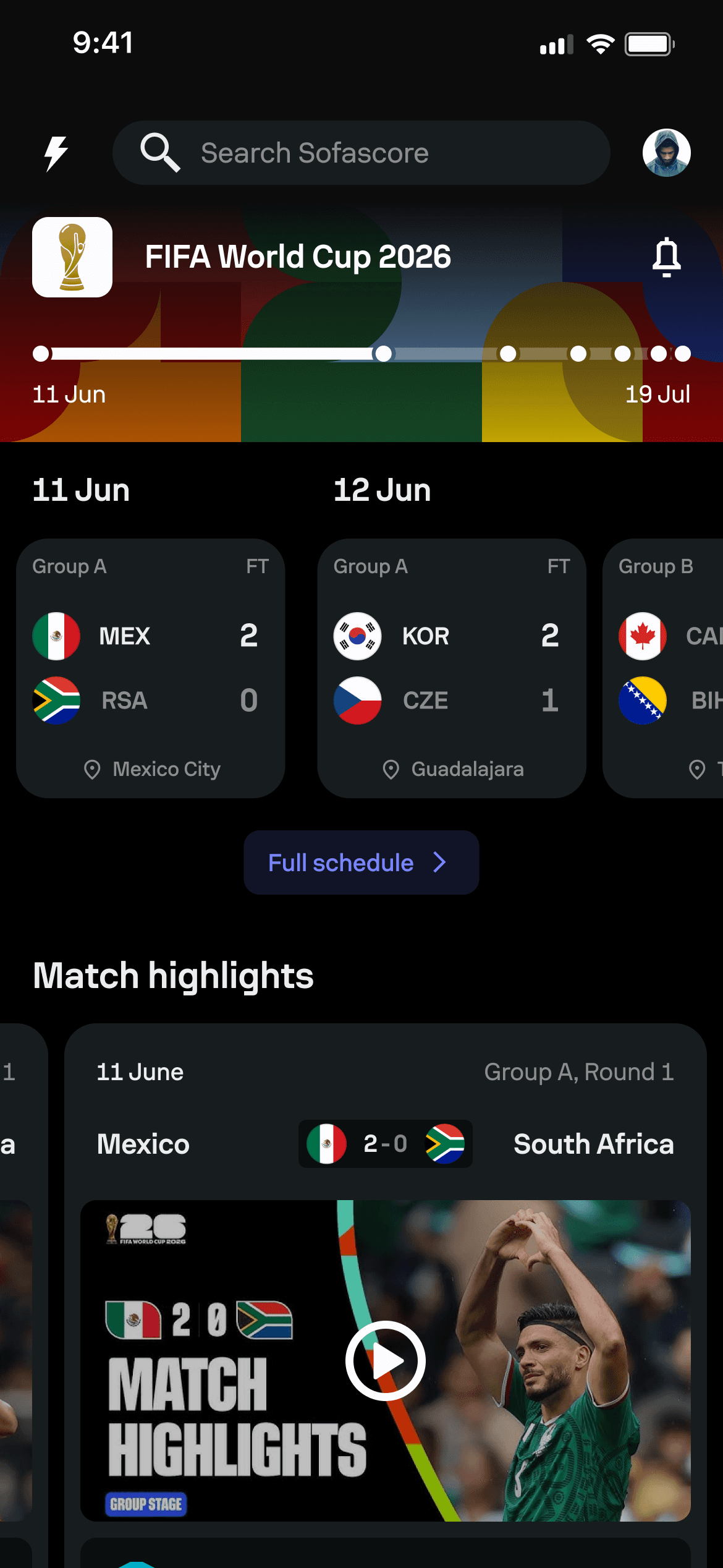
FIFA World Cup hub showing the tournament header, timeline and opening schedule.
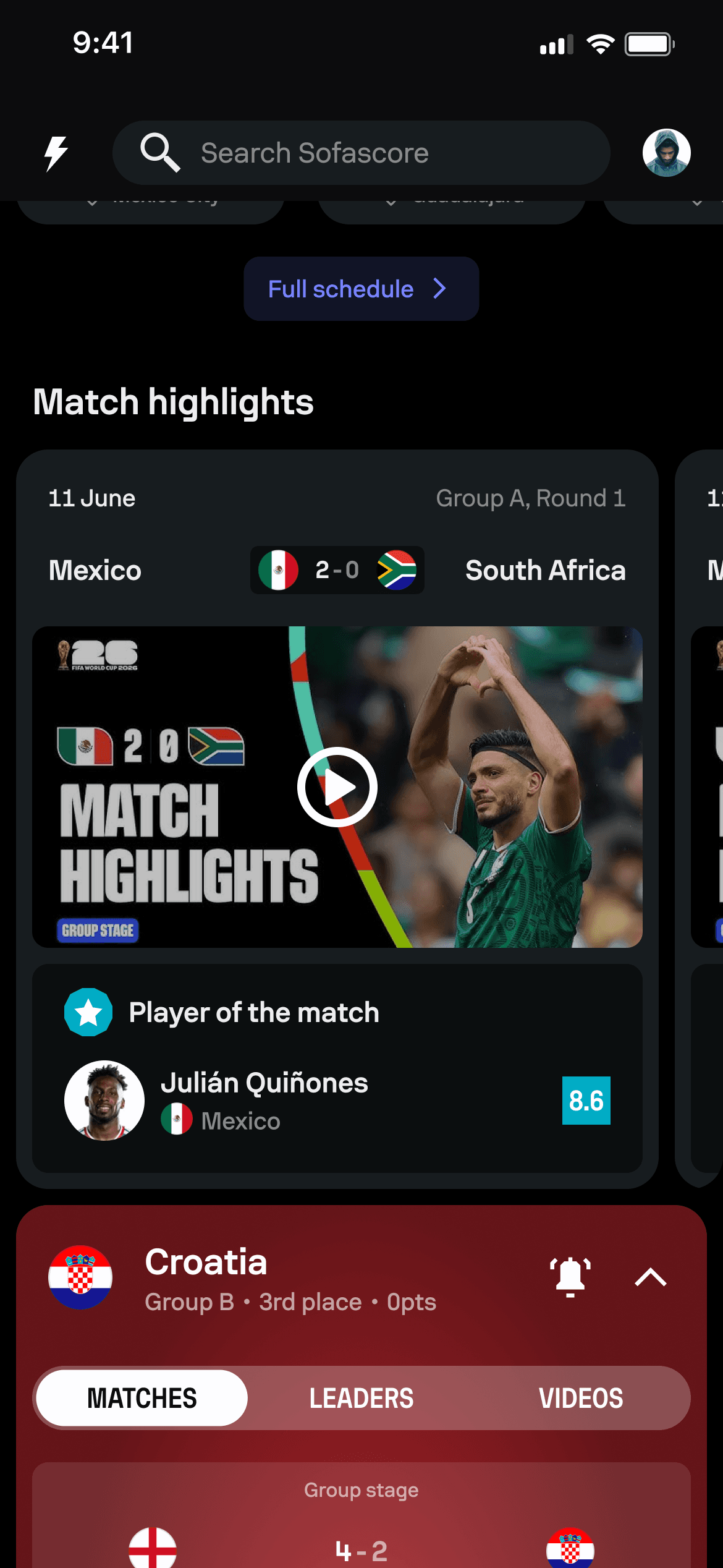
FIFA World Cup hub showing the daily schedule, match highlights and Player of the Match.
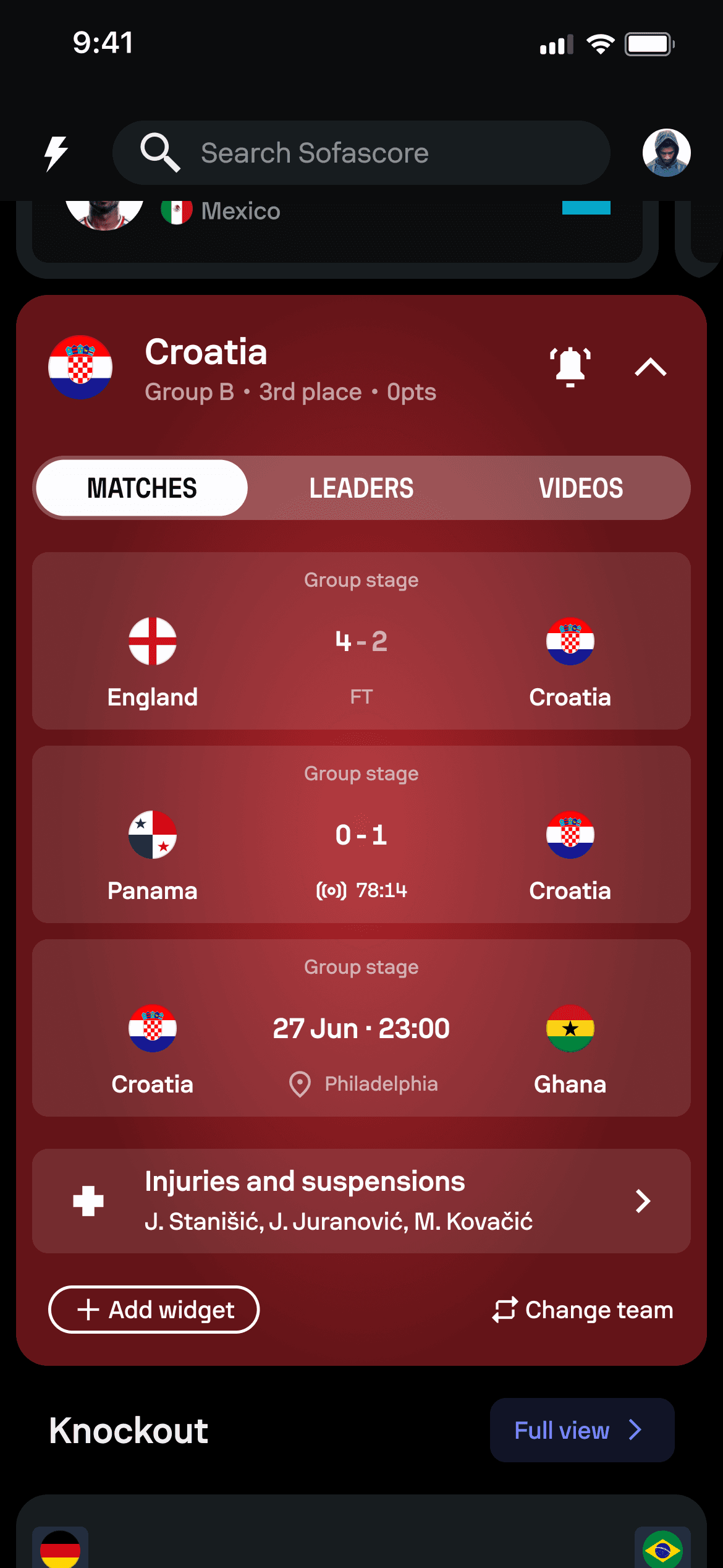
FIFA World Cup My National Team experience showing Croatia matches and relevant team information.
FIFA World Cup knockout bracket showing the path from the Round of 32 towards the final.
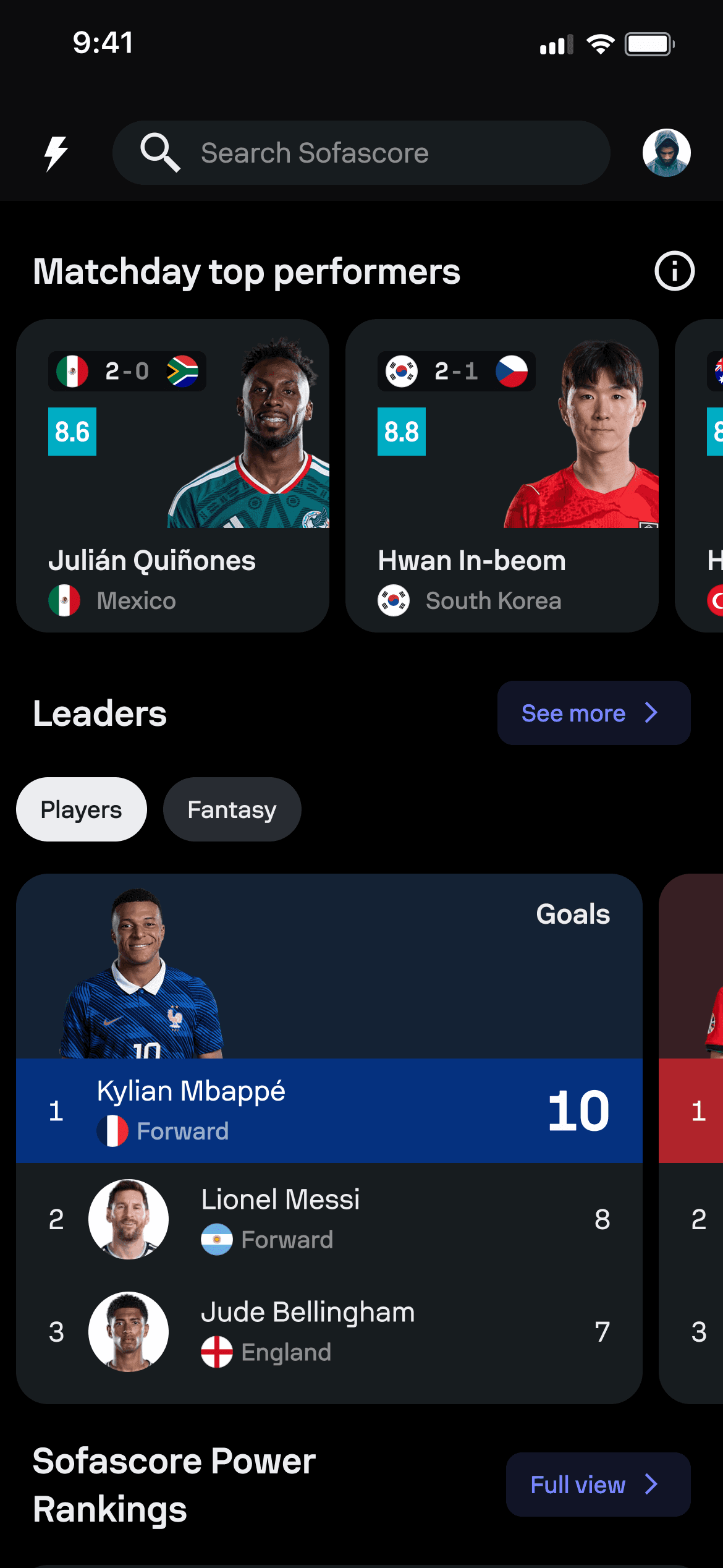
FIFA World Cup hub showing matchday top performers and tournament player leaders.
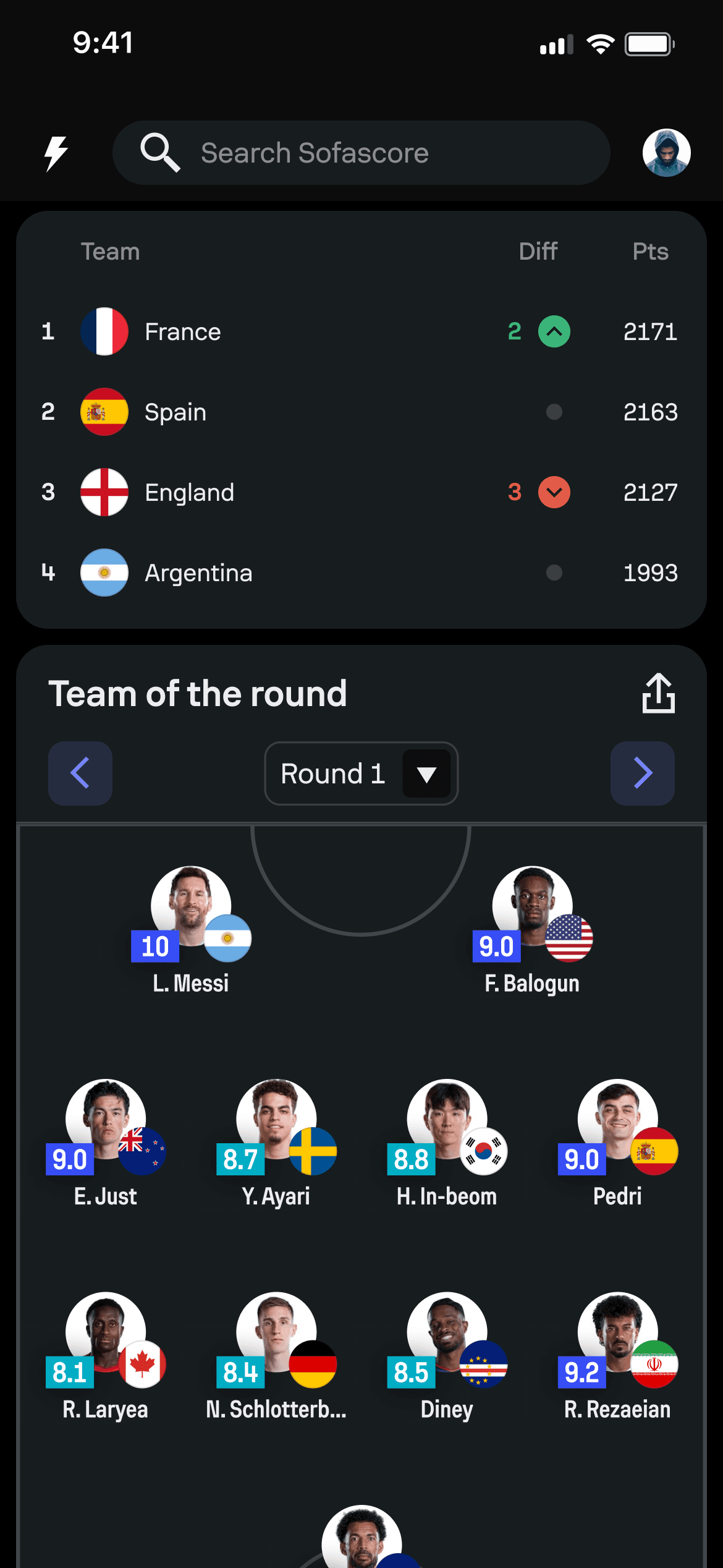
FIFA World Cup hub showing Sofascore Power Rankings and Team of the Round.
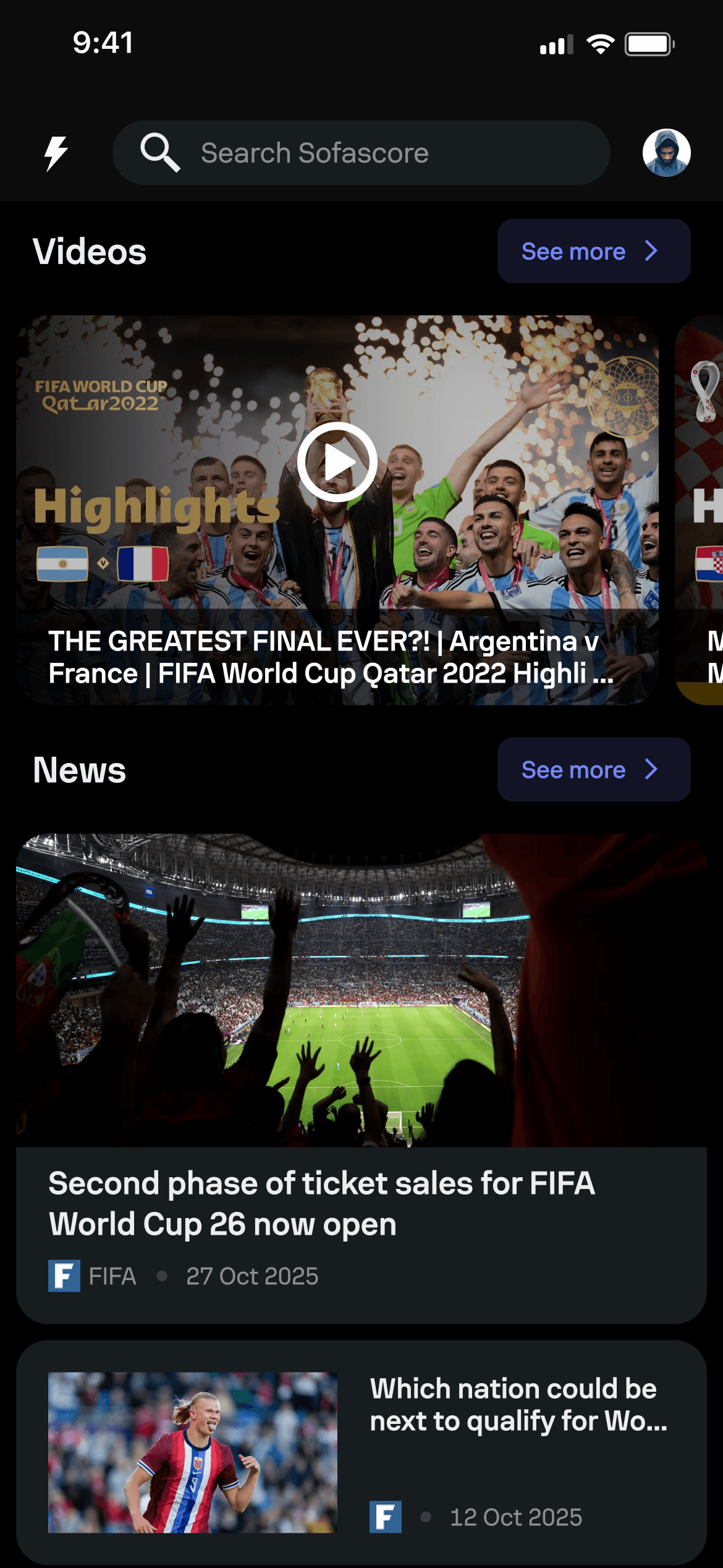
FIFA World Cup hub showing tournament videos, news and editorial content.

Start with where the tournament is now.

The header and timeline gave fans immediate orientation before they moved into matches, standings and deeper content.

01 / 07

Key takeaway

The hub stayed relevant not by adding more at every step, but by shifting the right information and content into view as the tournament evolved.

05 - Lifecycle

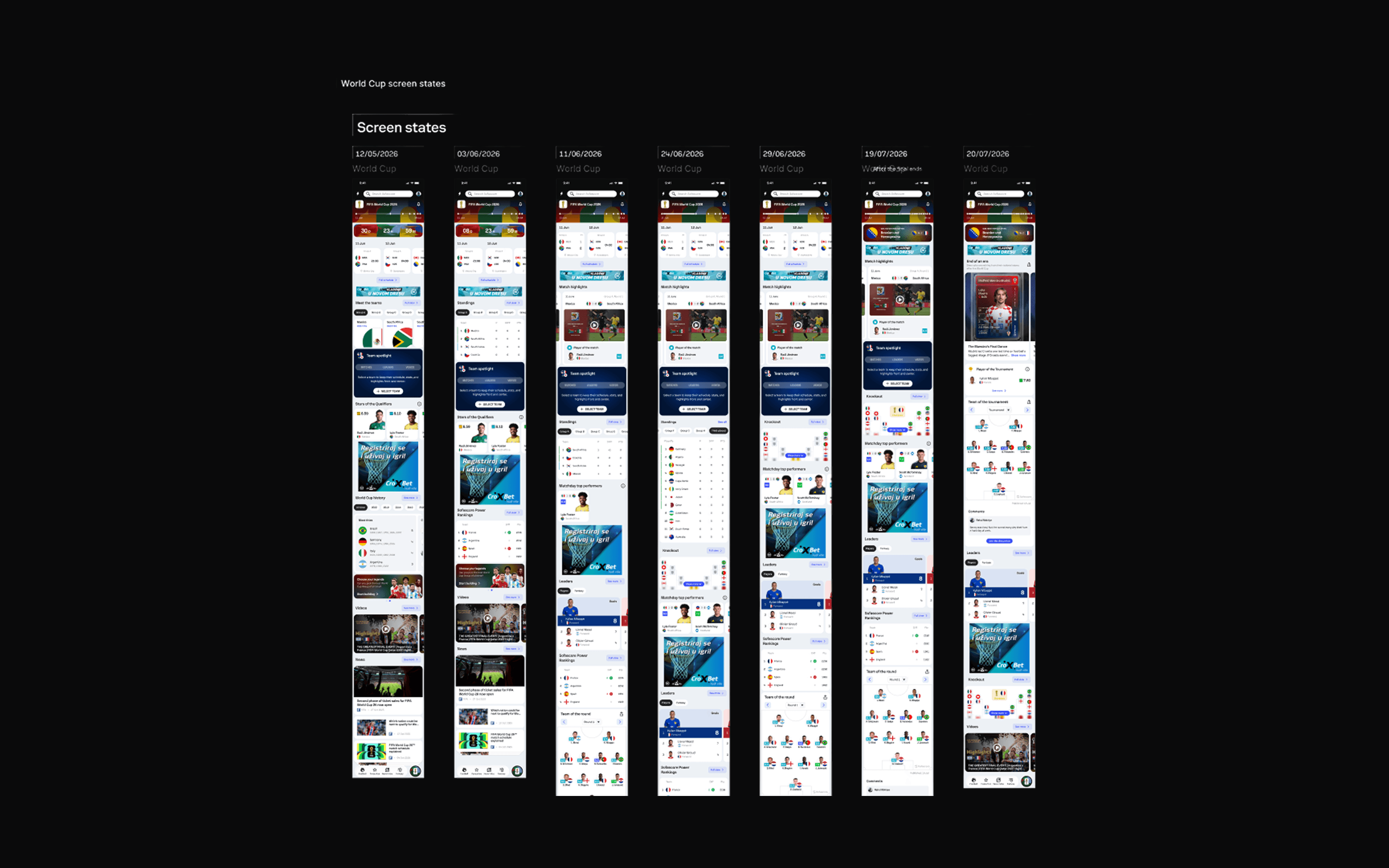
The hierarchy changed as the tournament moved forward.

The hub was designed as a changing product state rather than a fixed landing page. Content appeared, moved and disappeared as fan priorities changed.

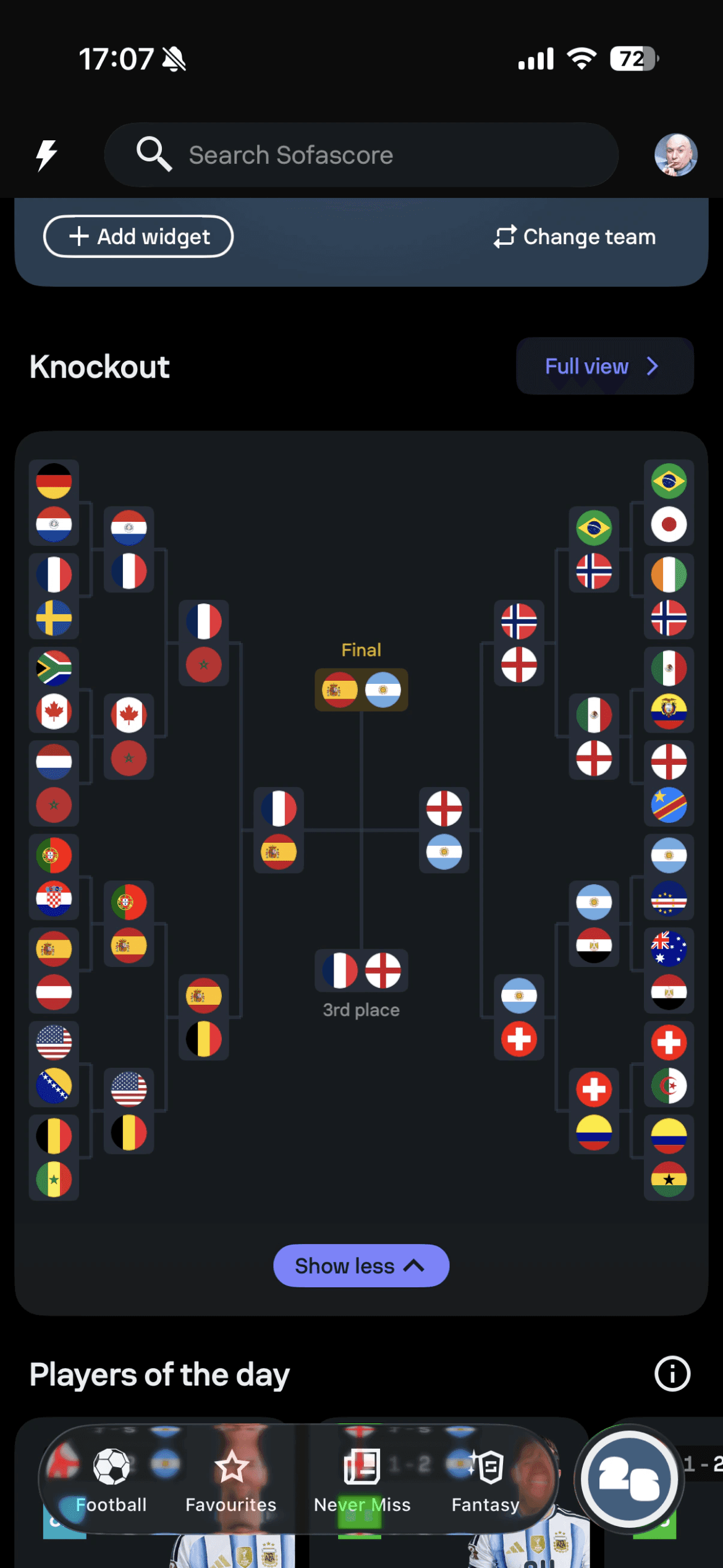
Selected FIFA World Cup hub states across the build-up, live tournament, knockout stage and post-tournament phase.

01 · Build-up

Education, anticipation and choosing a national team.

02 · Live tournament

Nearby matches, highlights and daily relevance.

03 · Knockout stage

Progression, leaders and the path towards the final.

04 · After the final

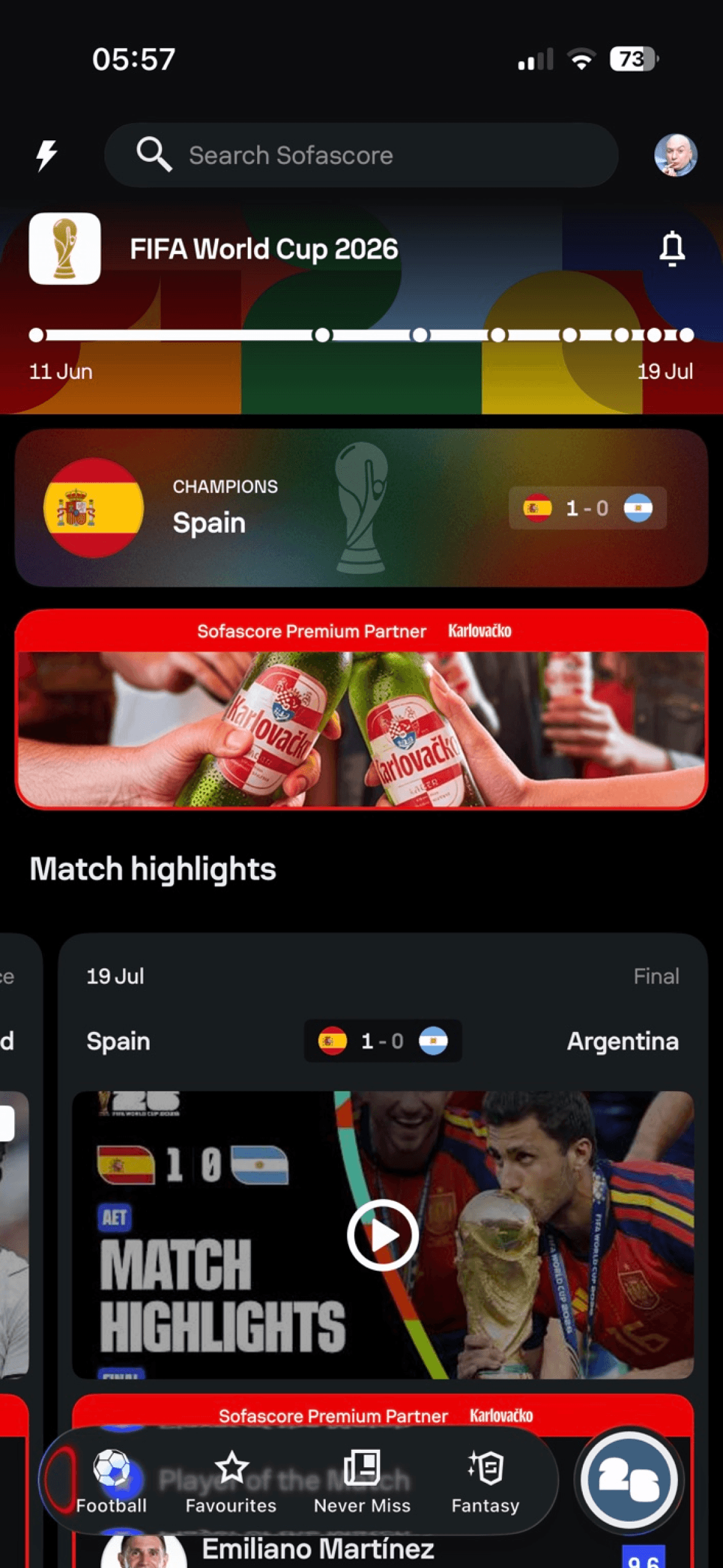
Winner, completed bracket and tournament closure.

The destination remained familiar while its hierarchy evolved with the stage of the tournament.

06 - Post-tournament

Live utility became a record of the tournament.

The final became the most-followed match of the tournament on Sofascore.

Its scale made the closing state more than a visual celebration. It became the most important transition from live competition to tournament history.

Match openings
Users following the final
FIFA World Cup post-tournament hub celebrating the tournament winner.
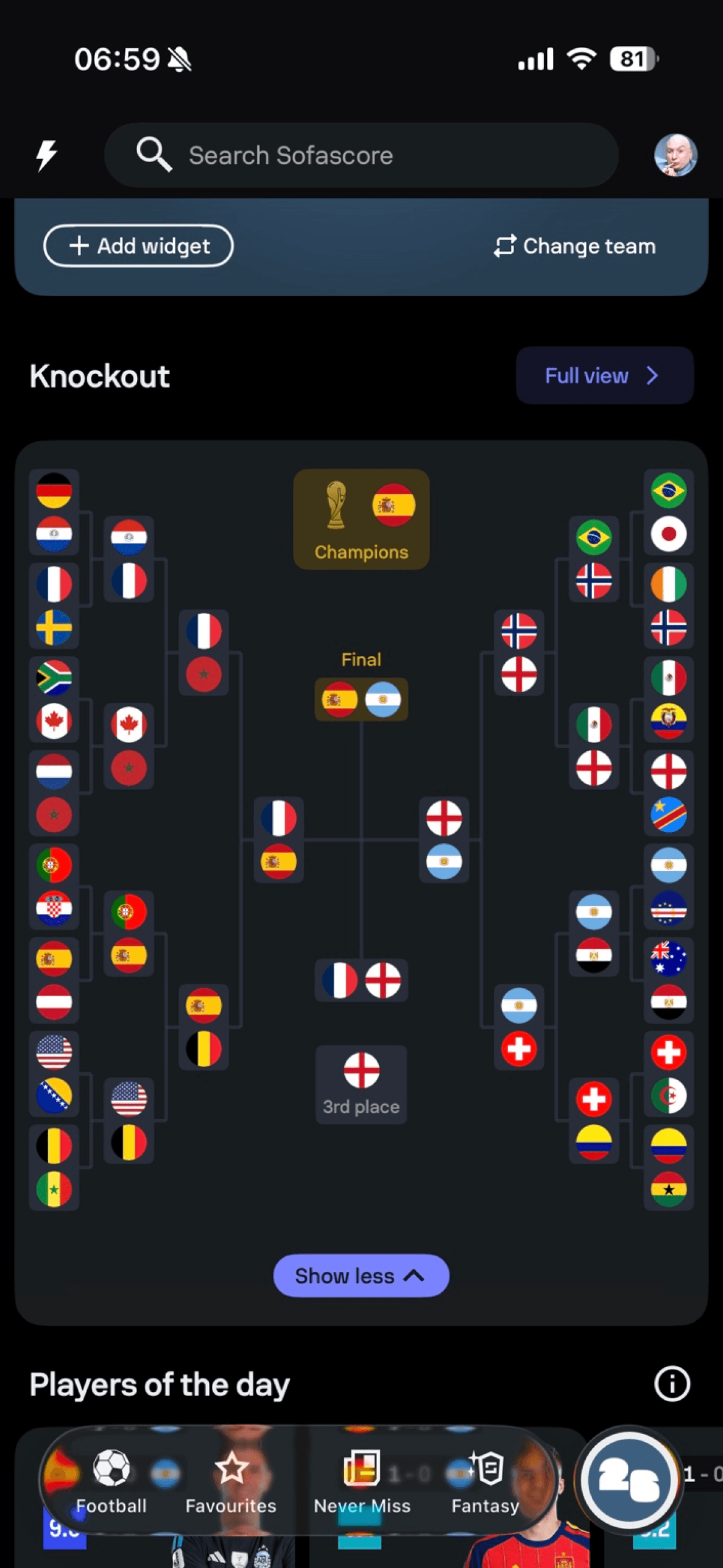
Completed FIFA World Cup knockout bracket showing the tournament journey.
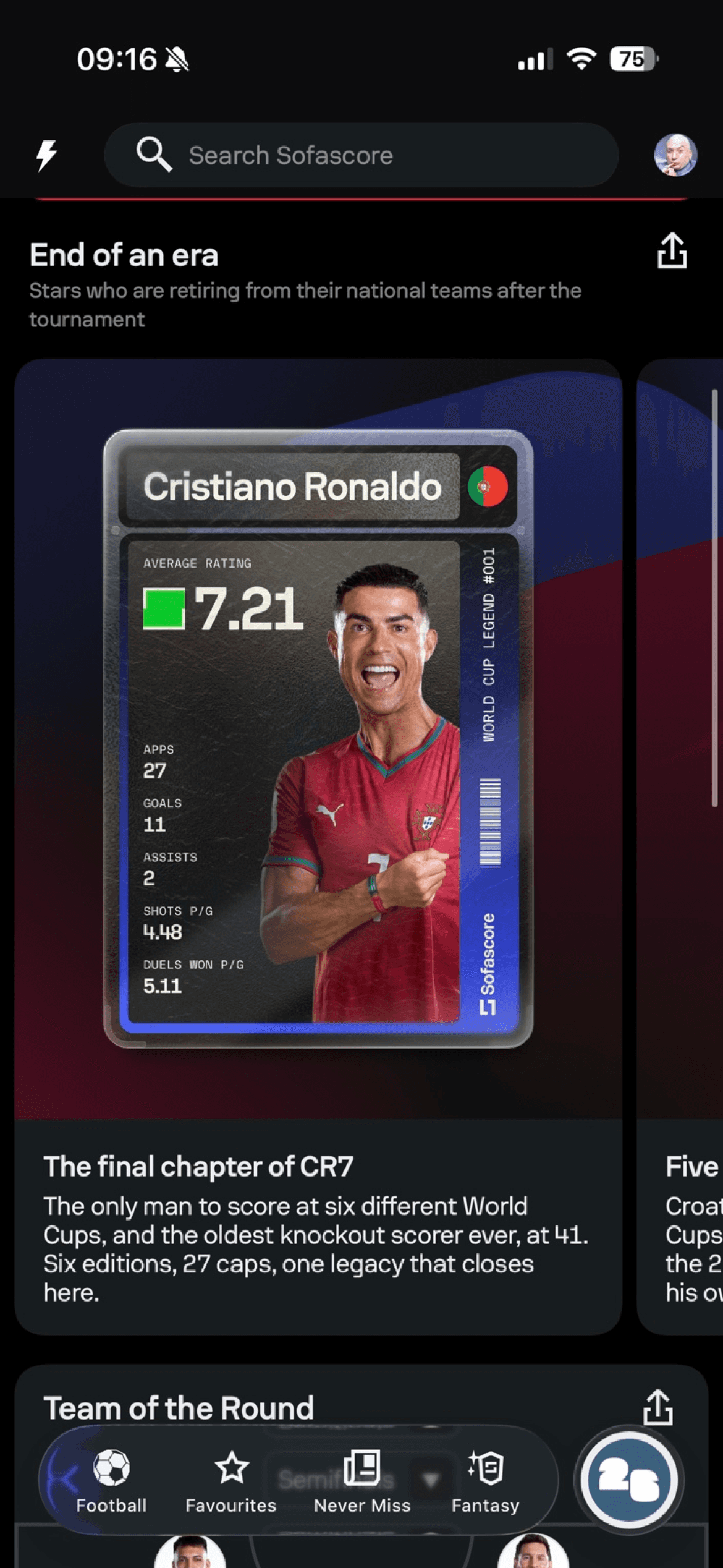
Post-tournament FIFA World Cup stories, videos and final highlights.
01 / 03

One final result became a complete record of how the tournament unfolded.

07 - Outcome

A global tournament became one of Sofascore's largest product moments.

Combining global reach with meaningful engagement inside the dedicated tournament experience.

Feature-specific product signals · internal product analytics
of Sofascore daily active users opened the Featured tab
of Featured tab users engaged with Team Spotlight
Platform-wide tournament context · Sofascore post-tournament reporting
Active users during the FIFA World Cup
World Cup screen openings across the tournament
New installs during the same period

The feature signals describe engagement with the product surfaces discussed in this case study. The platform figures establish tournament scale and are not presented as direct design attribution.

08 - Reflection

What designing for a live tournament taught me.

A product that changes every day cannot be designed as a set of screens. It has to be designed as a sequence of states, and every one of them has to earn its place.

FAMILIARITY

Familiarity is a feature

Fans already understood Sofascore's tournament hubs. Starting from that model and spending effort only where the World Cup was genuinely different meant less to learn for users and less to build for the team.

RELEVANCE

Relevance has a schedule

What mattered on 11 June was not what mattered on 19 July. Designing for the tournament's phases, from build-up to the days after the final, kept one destination useful instead of forcing four.

PRODUCT SCOPE

Constraints set the scope, not the ambition

Fixed deadlines across iOS, Android and web decided what shipped. Ideas that did not strengthen the core journey stayed out, and the product was better for the discipline.

Live products do not stay relevant by doing more. They stay relevant by knowing what matters today.