01
Enter
Competition Home
Understand the current round, track points and continue with the most relevant action.

Case study 01
Sofascore · Fantasy
Sofascore Fantasy
I joined as the sole Product Designer when development started and helped shape Fantasy from an early hypothesis into a live, multi-competition product.
The experience connected competition discovery, squad management, live scoring and player analysis through data users already associated with Sofascore.
Ownership
Sole designer
From development start
Product status
Live
Multi-competition product, still evolving
Internal analytics
392K
users created their first Fantasy team during the World Cup
The opportunity
Fans already opened Sofascore to follow matches, results and statistics. Fantasy transformed that passive match-following behaviour into an active cycle of preparation, decisions and live outcomes.
The opportunity was to create a scalable product that could increase engagement, support competition partnerships and use Sofascore's existing sports data as a meaningful product advantage.
Before Fantasy
Follow the match, check the result and leave the experience.
With Fantasy
Prepare, make decisions, follow live points and return for the next round.
The product loop
Each surface had a distinct role, but together they supported one repeating journey across every round.
Enter
Understand the current round, track points and continue with the most relevant action.
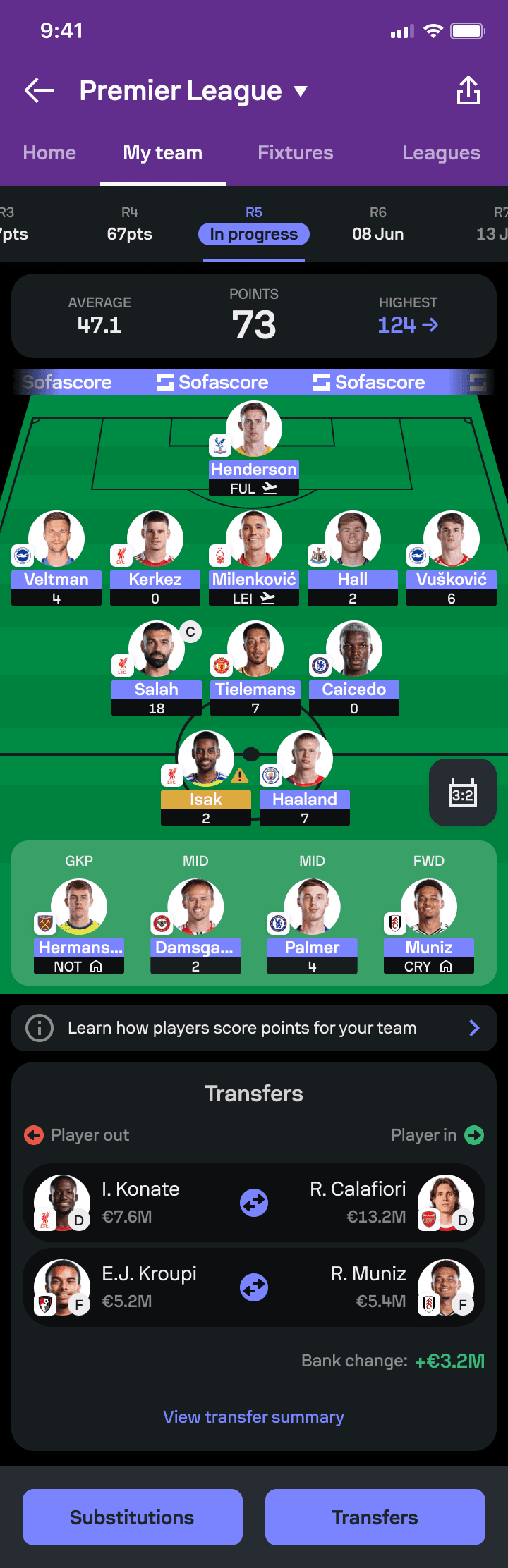
Manage
Set the lineup, manage transfers and react while the round is still active.
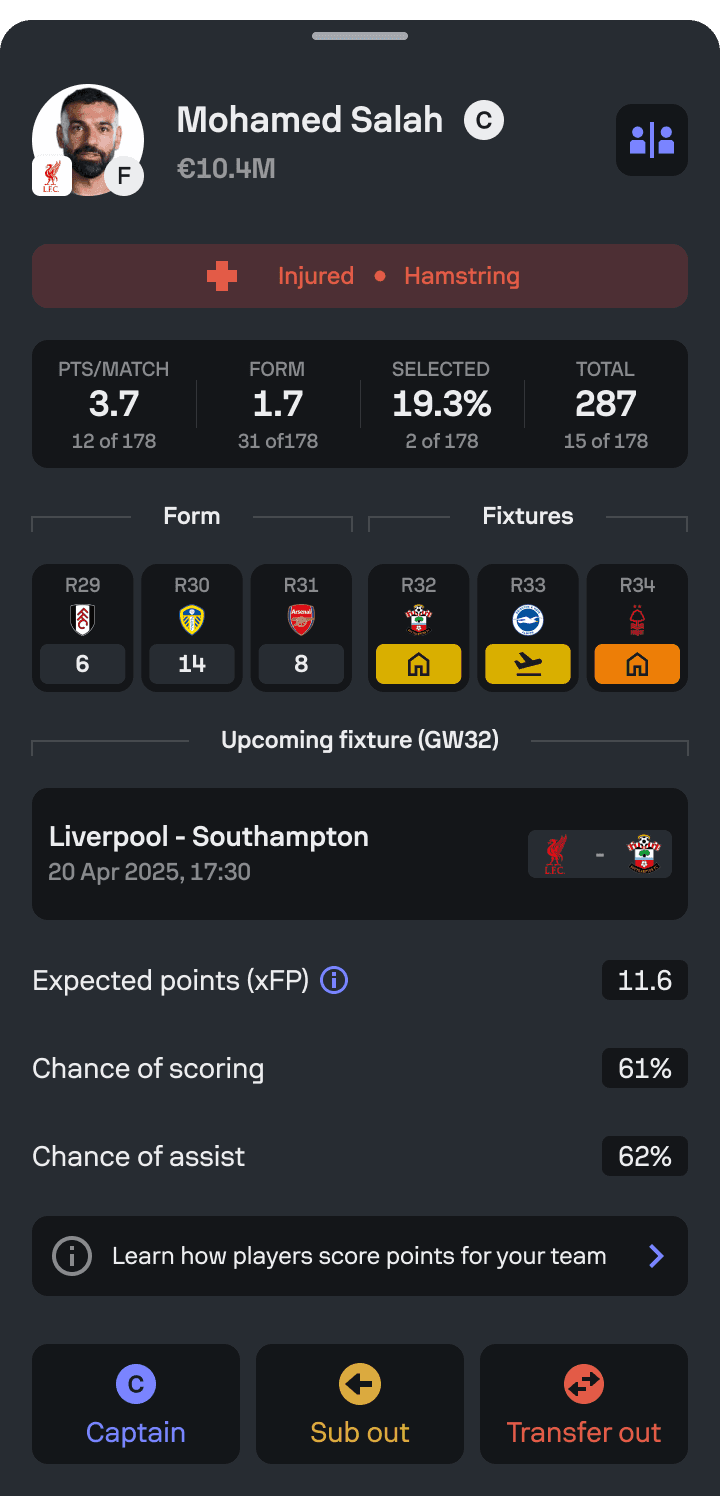
Decide
Compare form, price, fixtures and expected output before committing to a player.
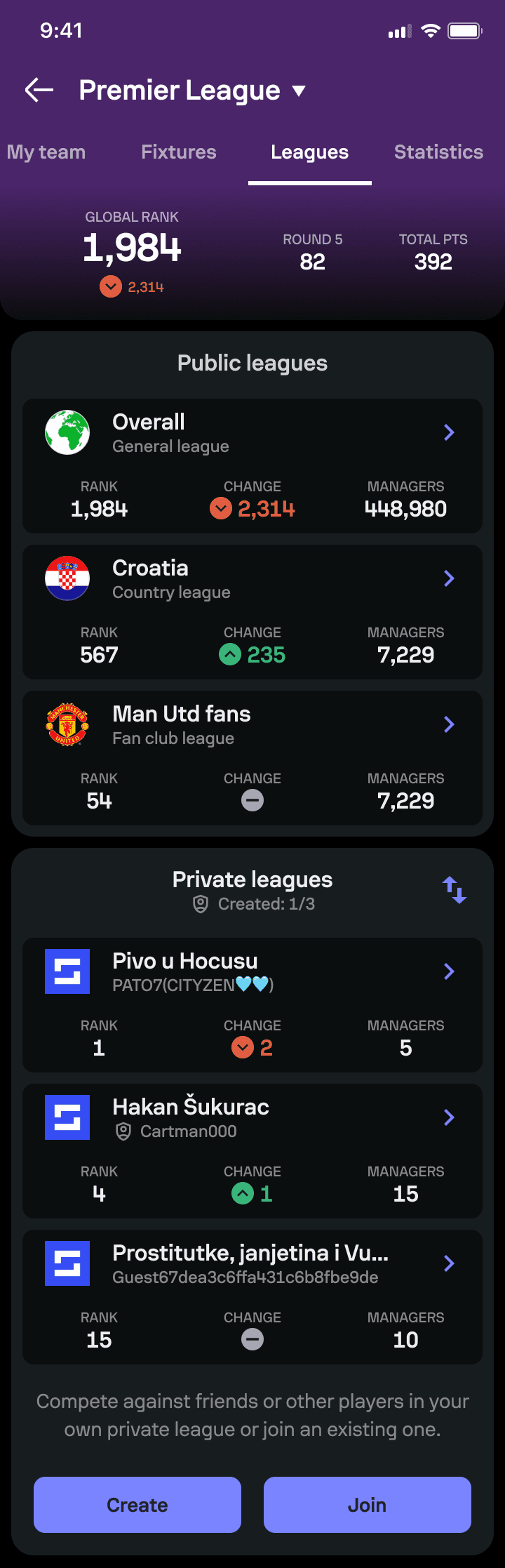
Compete
Join leagues and tournaments through one system designed to scale across competitions.
Product loop
Build a team. Make a decision. Follow the outcome. Then begin again in the next round.
Fantasy ecosystem
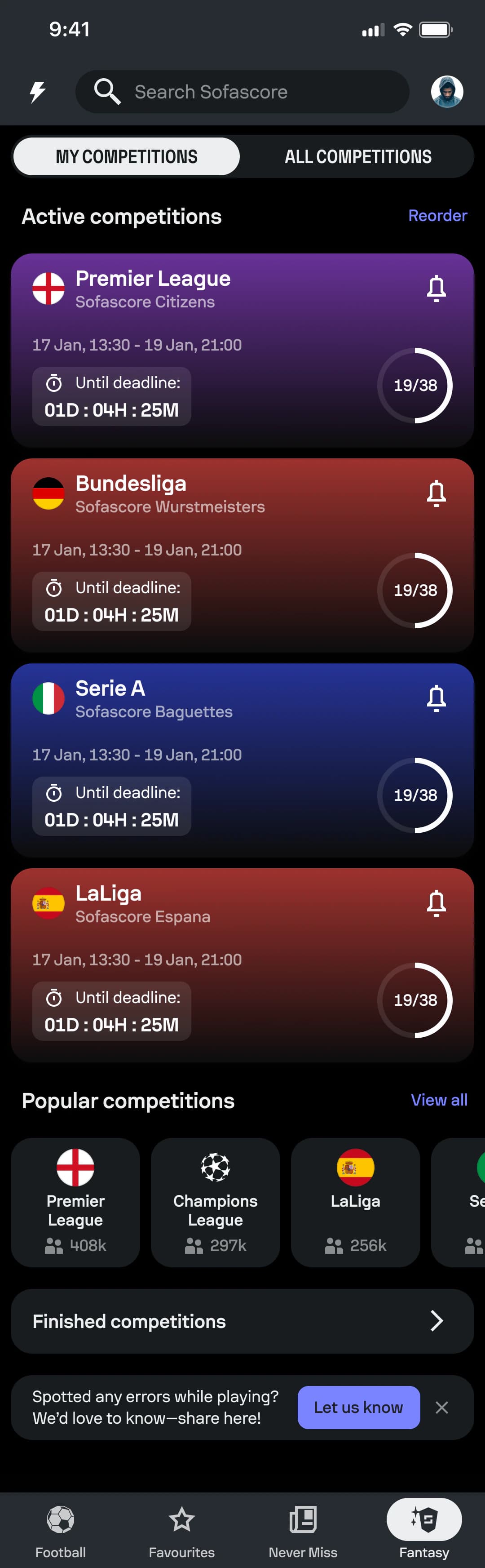
Central Fantasy destination
Bottom navigation was the main entry point, while promotional banners across competition and player surfaces brought users into Fantasy at relevant moments.
Swipe through capabilities
Product hierarchy
Competitions supported discovery and return, while Competition Home and My Team remained the core repeat-use experience.
Major product decisions
The product needed a distinct scoring identity, a hierarchy that supported repeat use and enough depth to serve both new and experienced Fantasy players.
Scoring identity
The problem
Fantasy Premier League already had a familiar bonus-point model. Repeating it would have reduced onboarding friction, but it would not have given the product a distinct reason to exist inside Sofascore.
The decision
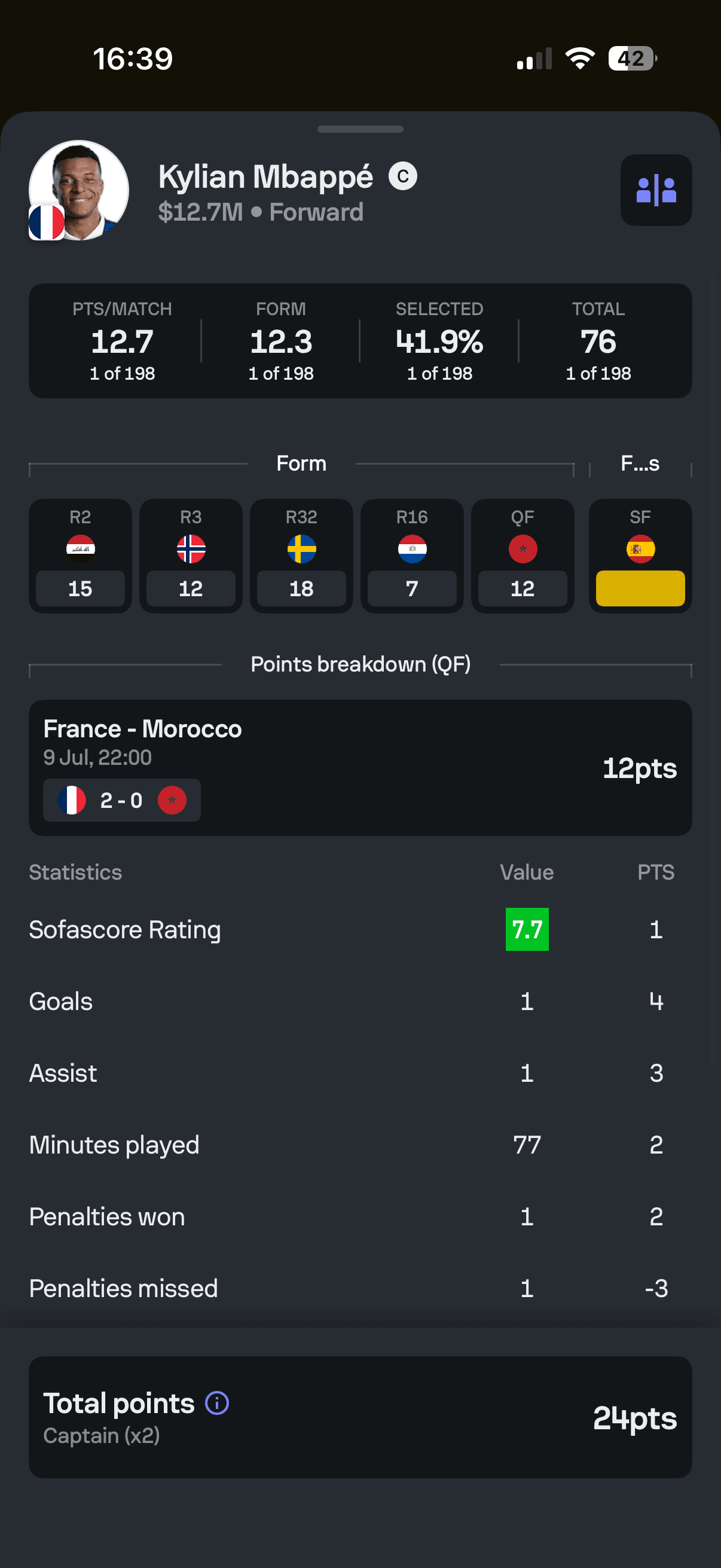
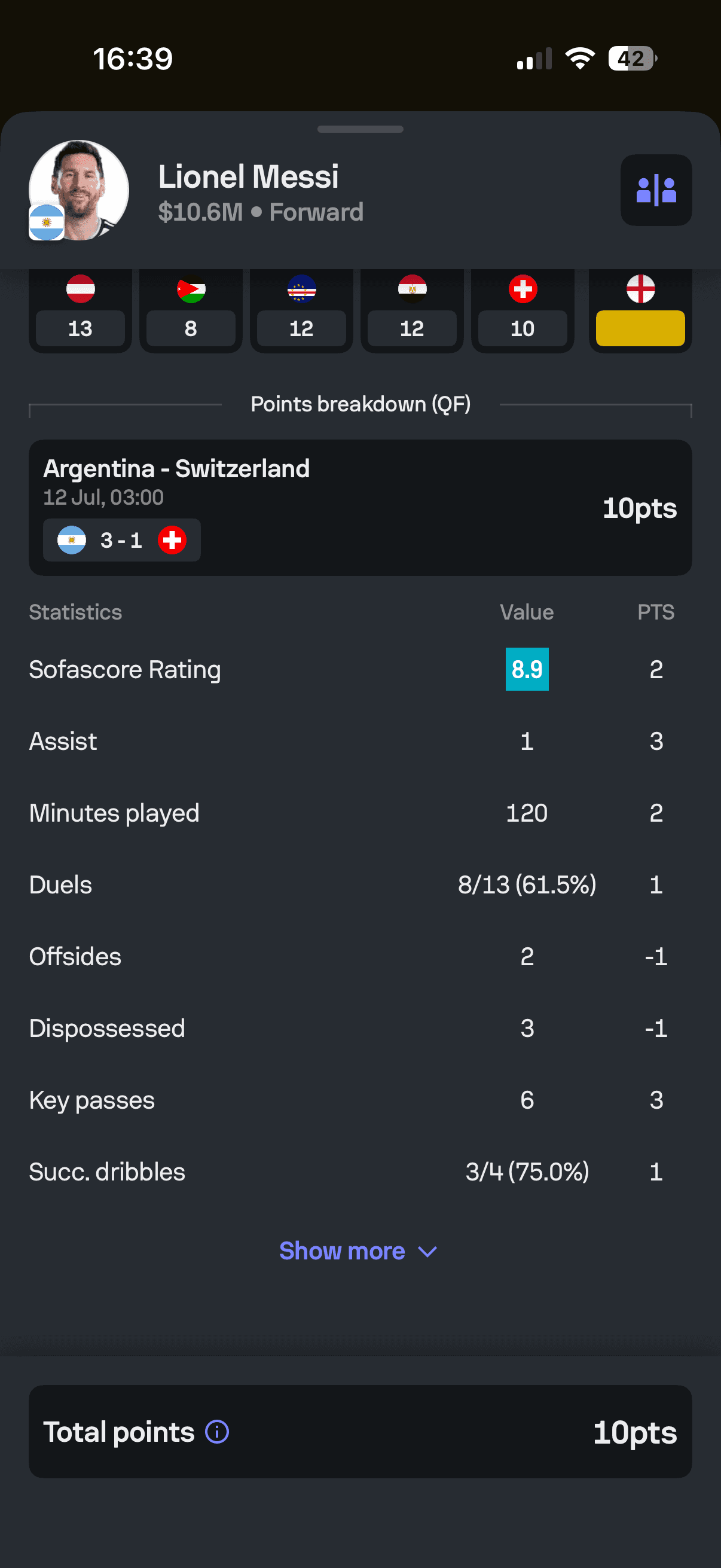
We connected Fantasy points with Sofascore Rating, match events and player statistics. The scoring model rewarded performance through a system users already associated with Sofascore.
Product consequence
The game gained its own scoring identity while turning existing sports data into a meaningful product advantage.
Information hierarchy
The problem
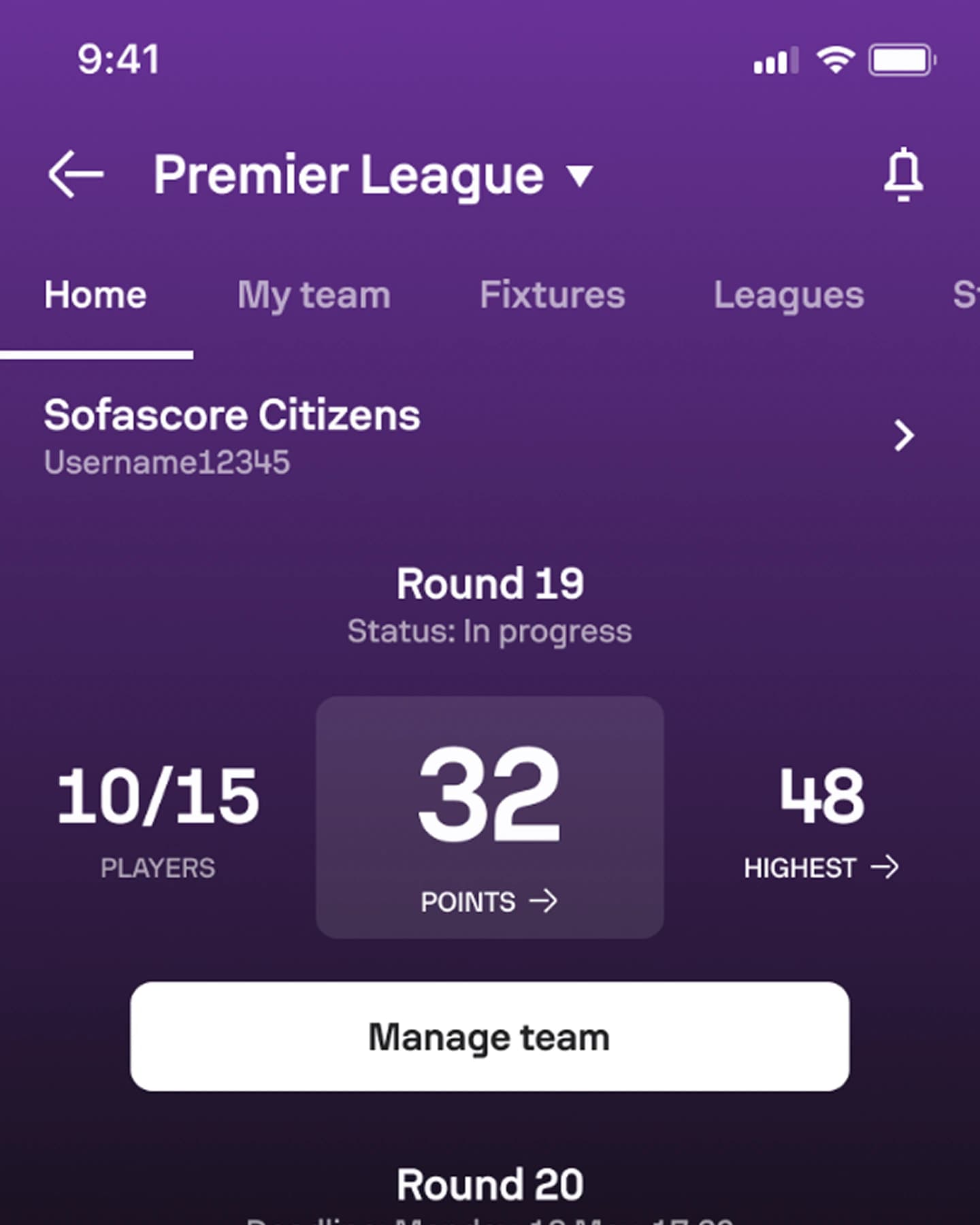
As Fantasy grew, Competition Home accumulated more information. Current points, active players, deadlines and team-management actions began competing for the same attention.
The decision
We reorganised the screen around the current round, the most relevant team action and the next deadline without changing the mental model existing players had already learned.
Product consequence
The screen became easier to scan because the hierarchy changed, not because the entire product was redesigned.
Evidence from live use
Post-tournament analytics showed significantly higher average Fantasy engagement on deadline days, reinforcing how important time-sensitive decisions were to the product rhythm.
Different player needs
The problem
First-time players and experienced Fantasy managers used the same product with very different expectations. Beginners needed confidence, while experienced players wanted enough information to make deliberate decisions.
The decision
We used clear primary actions, progressive information and deeper player breakdowns so complexity appeared when it became useful rather than all at once.
Product consequence
The goal was not to remove complexity. It was to reveal the right amount at the right moment.
Evidence from live use
392K users created a Fantasy team for the first time during the World Cup, making first-time usability a real product requirement rather than an edge case.
The screens changed because the priorities behind them changed.
Inside Competition Home
Competition Home needed to work before matches, throughout live play and after the final player had finished. Its priorities changed with the state of the round, while the destination remained familiar.
The experience connected round status, the next deadline, live player performance, Team of the Round and Fantasy news inside one continuous screen.
Round overview
The top of Competition Home establishes the competition, team, active round, current points and players still in action. The complete purple overview remains visible before the first Top players card begins.
Next action and deadline
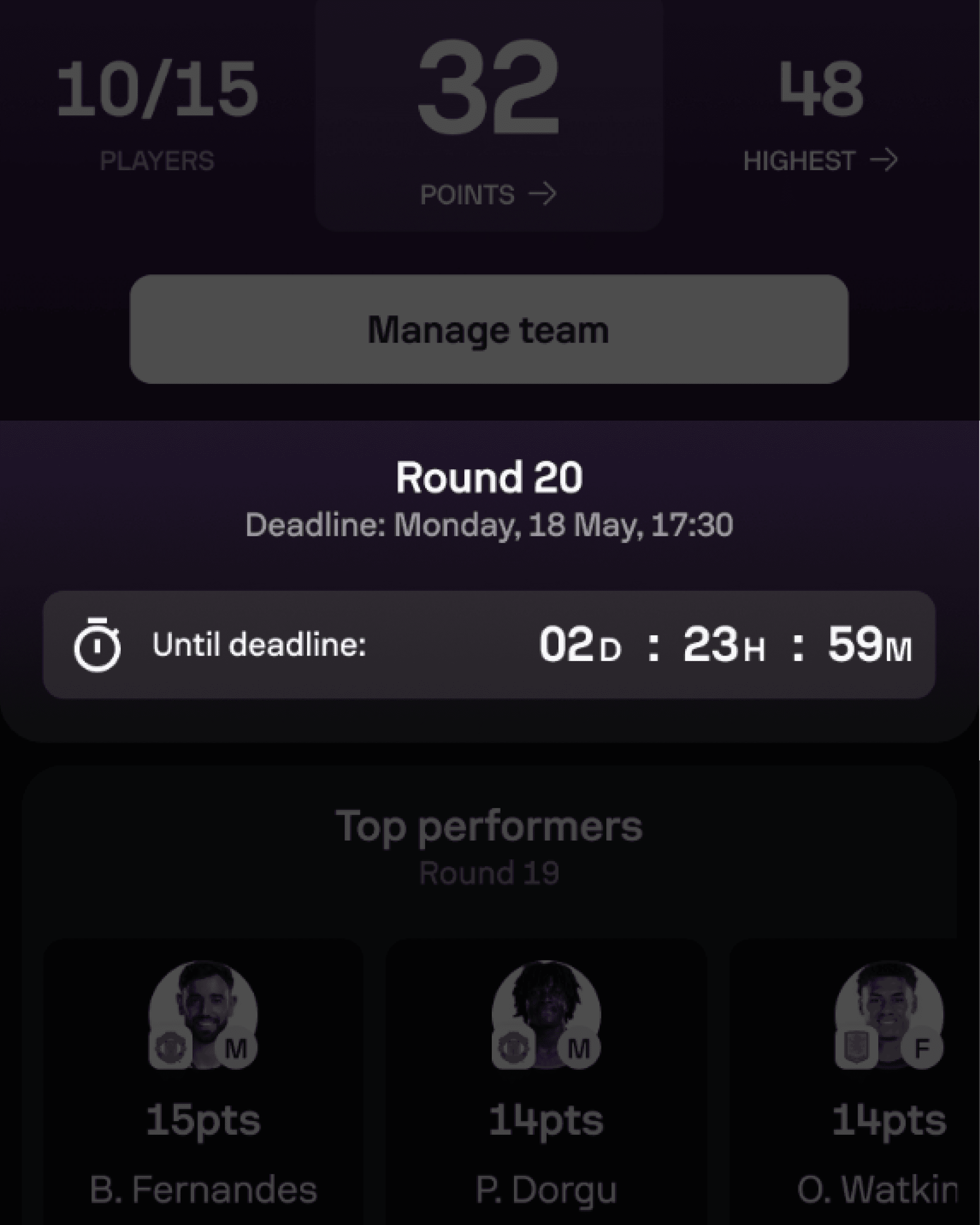
The same overview surfaces the primary team-management action and the next deadline, making it easy to understand what requires attention before the following round.
Top players
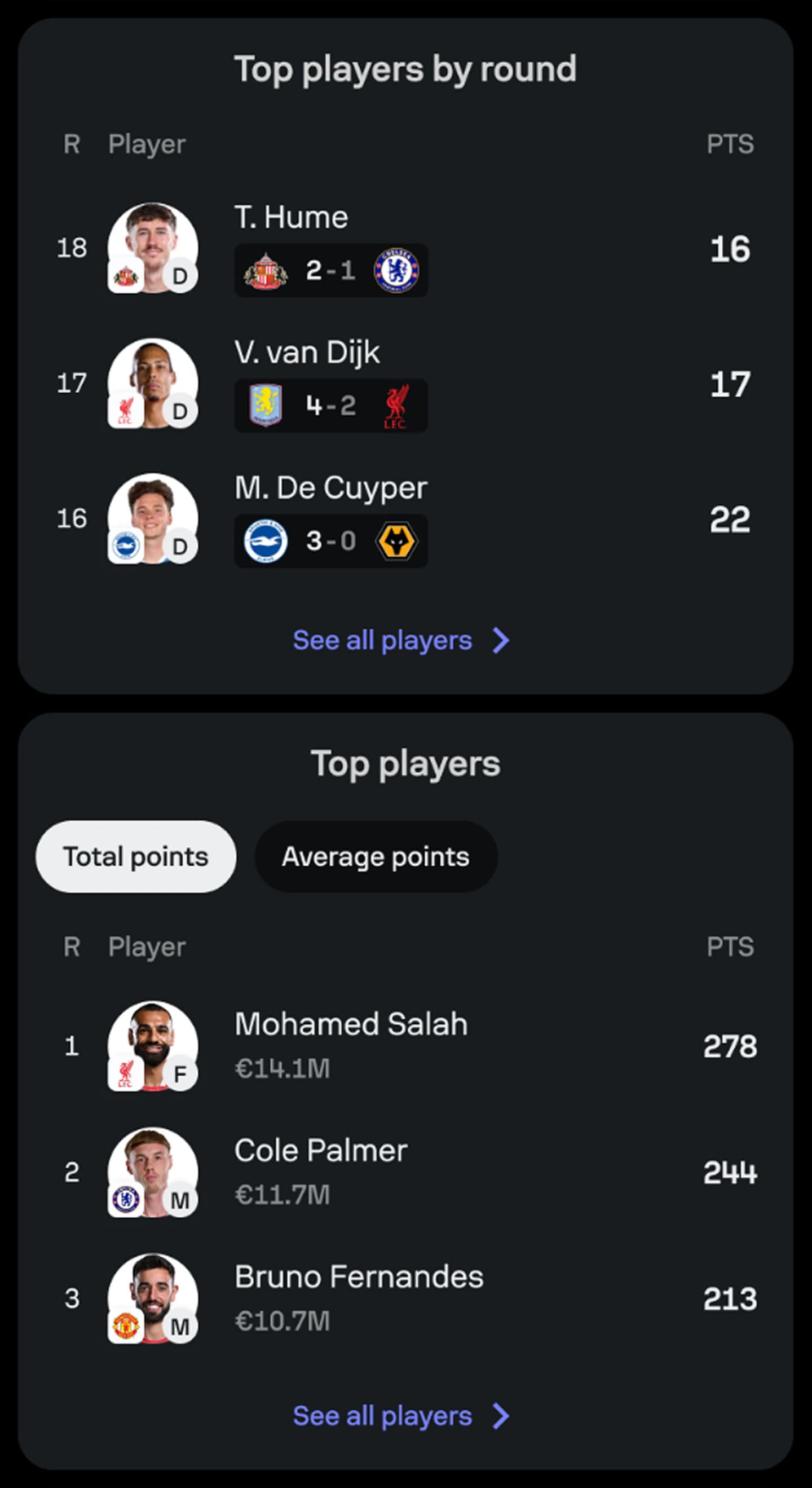
Top players and Top player by round highlight the strongest performers across the entire Fantasy game. The rankings update as matches are played, helping users see which players are delivering the most points.
Team of the Round
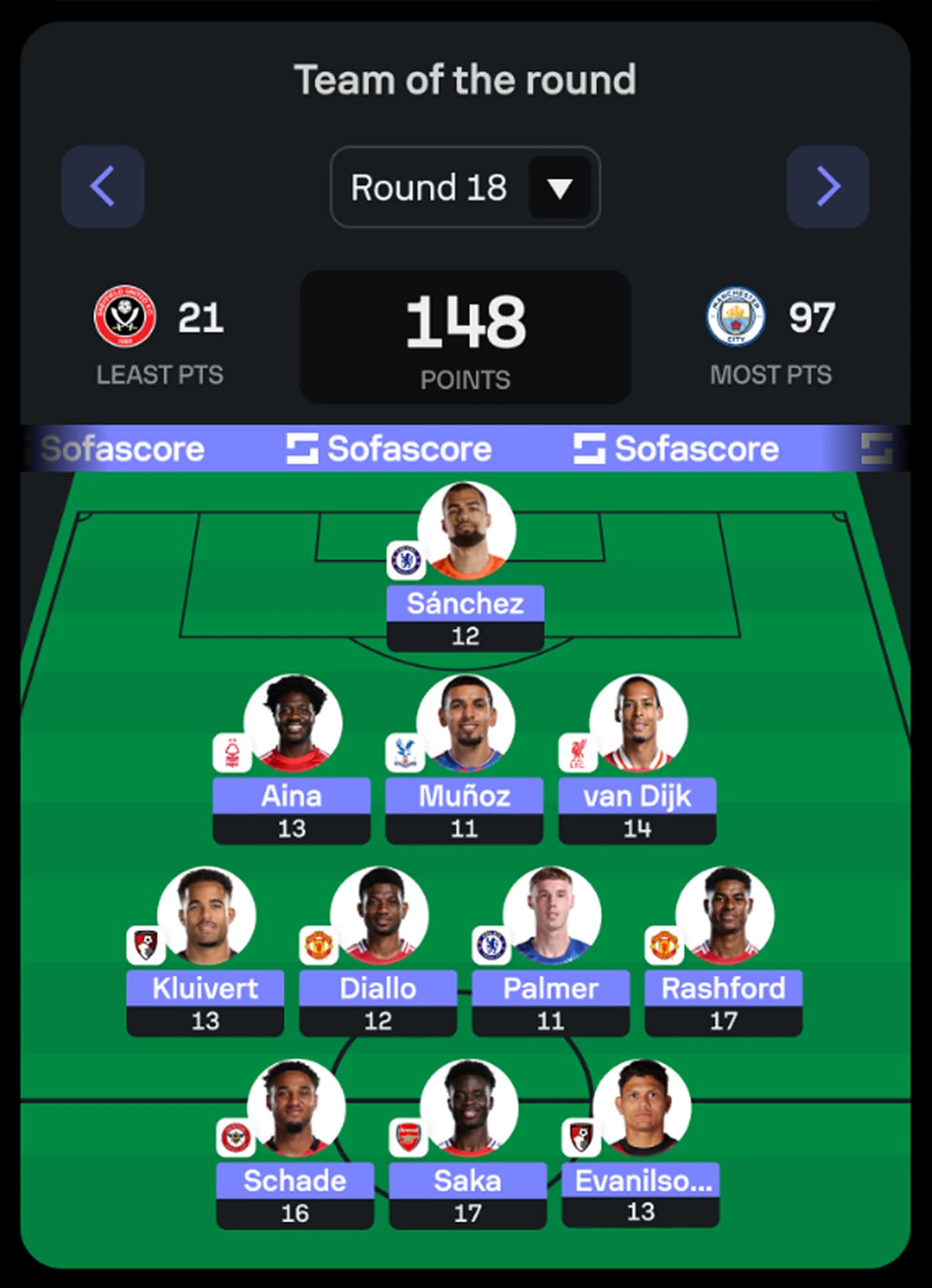
Team of the Round combines the highest-scoring players from the previous round into one ideal lineup, showing what the strongest possible Fantasy team could have looked like.
Fantasy news
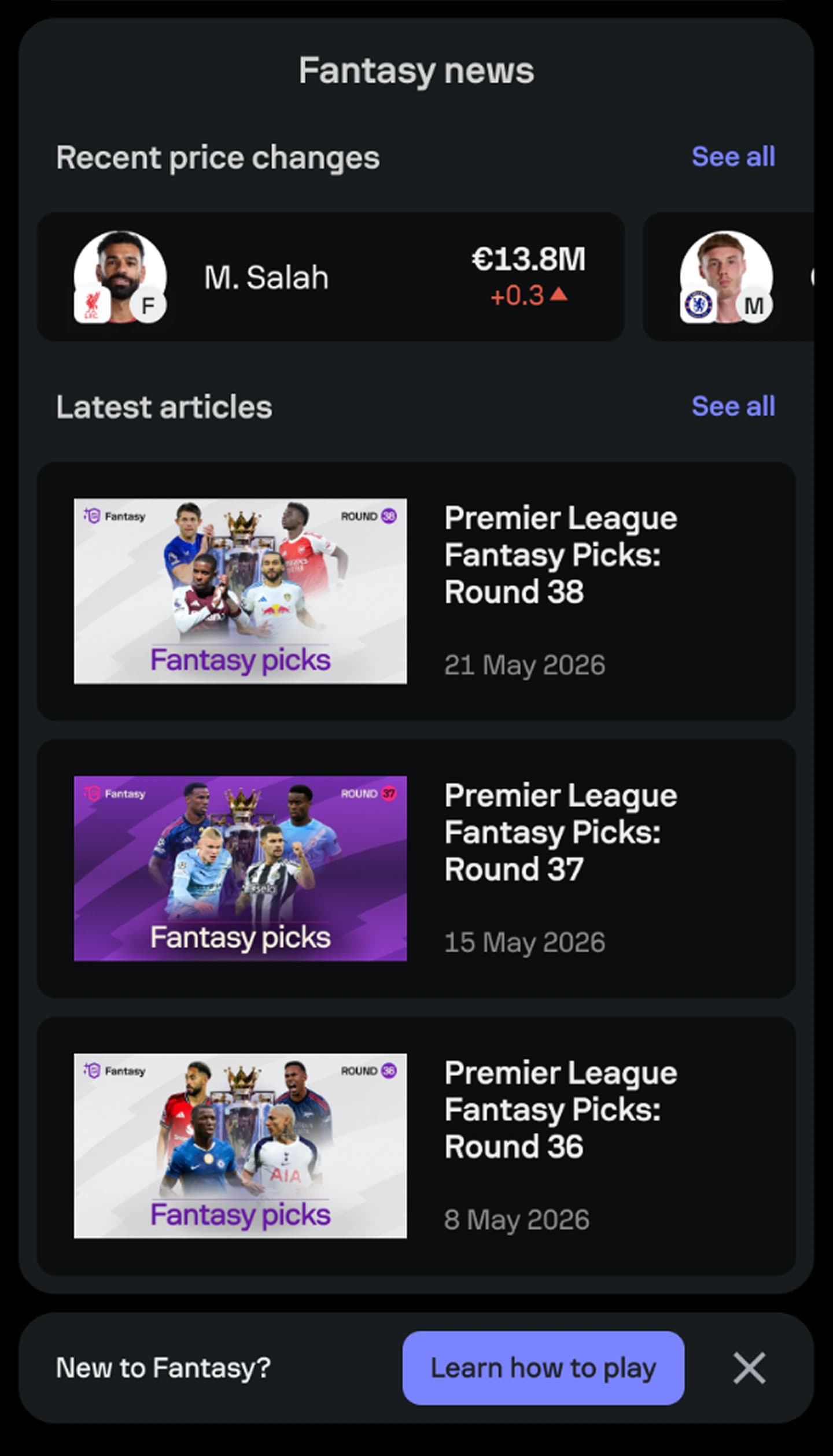
Price rises and drops, player updates and Fantasy-specific news give users useful context between rounds and help them prepare for their next transfer or lineup decision.
Swipe through experience
Key takeaway
Competition Home made each phase of the round understandable without forcing users to relearn the product whenever its priorities changed.
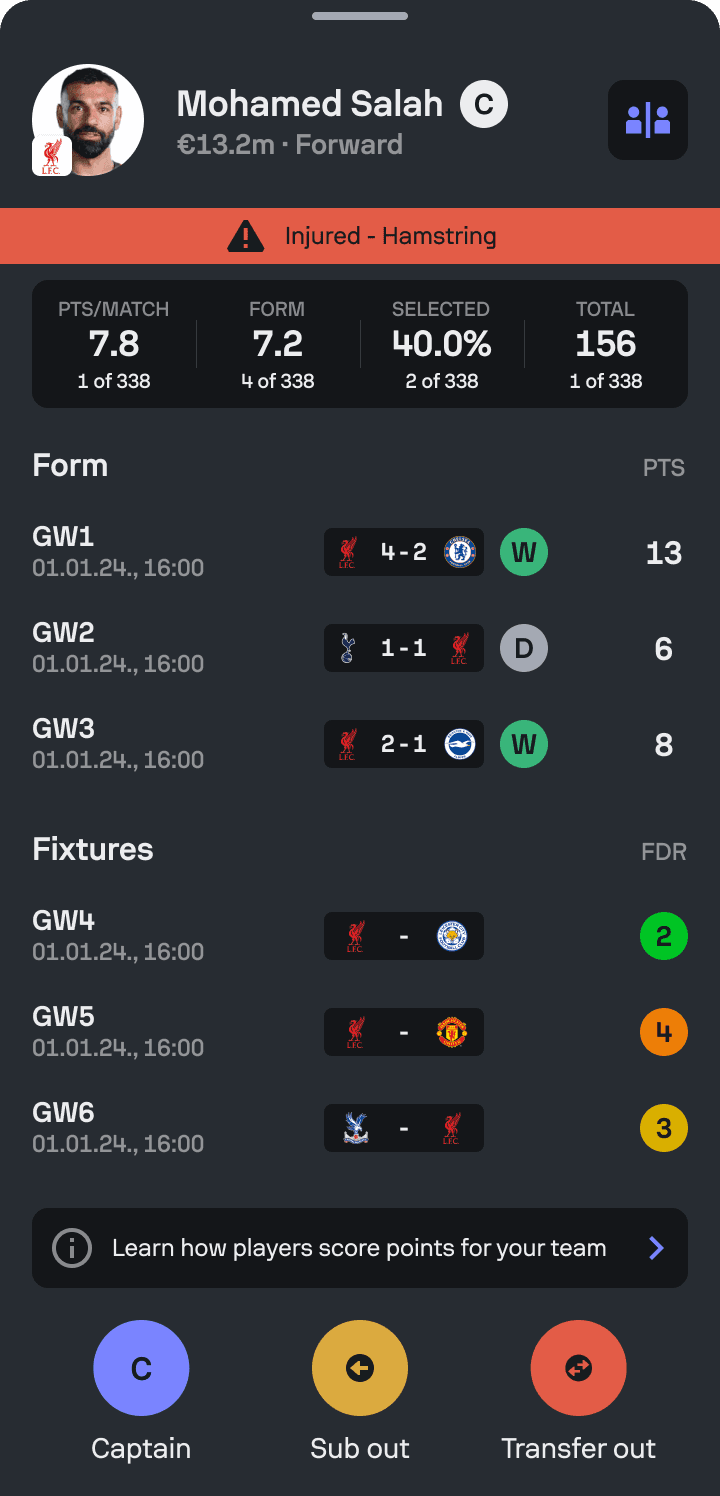
Player Modal evolution
Surface information
Price, recent form, fixtures and player information became accessible inside one compact surface.
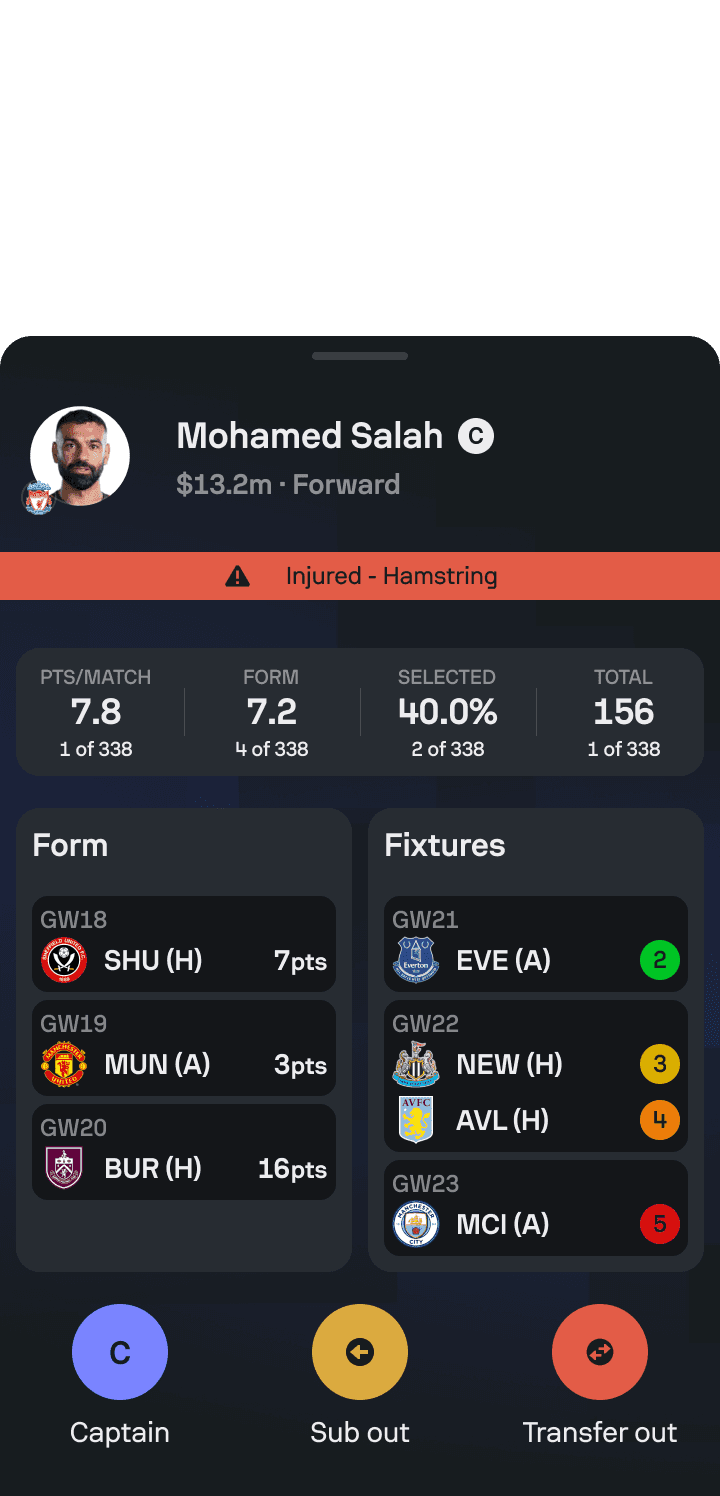
Improve comparison
A clearer hierarchy made recent performance and upcoming fixtures easier to evaluate together.
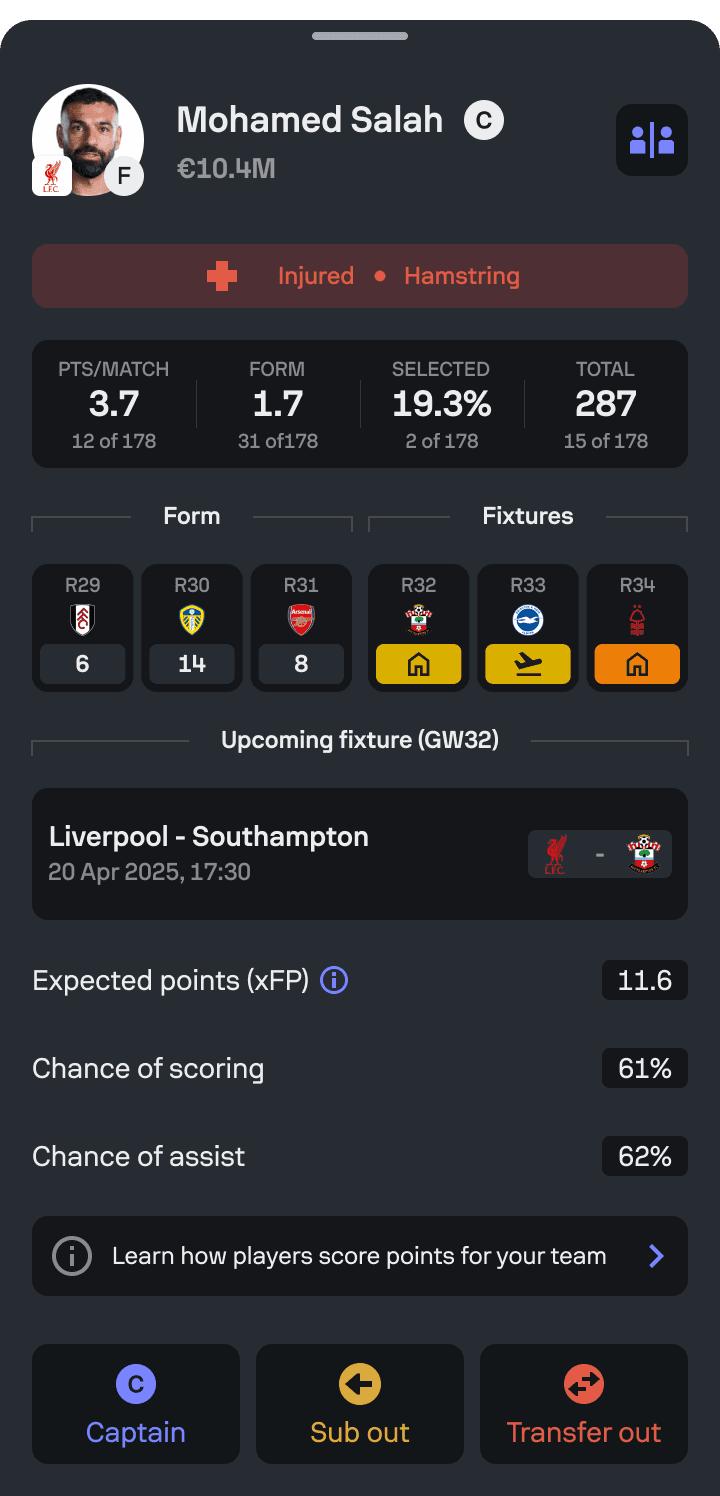
Support the decision
Predictive metrics and richer fixture context transformed the modal into a decision-support surface.
Swipe through iterations
The progression
The modal evolved from explaining the playerto reducing uncertainty before a decision.
Price
Can I afford the transfer?
Recent form
Is the player delivering now?
Fixtures
What is the short-term opportunity?
Expected output
Is the potential worth the risk?
Where engagement concentrated
My Team and Transfers were the most time-intensive Fantasy surfaces during the World Cup. The strongest engagement concentrated around evaluating the current squad and deciding what to change next.
The Player Modal supported that wider decision journey by bringing relevant player signals closer to the moment a transfer decision was made.
My Team
12min
average engagement per user
98.3K total hours
Transfers
13.2min
average engagement per user
63.9K total hours
Internal product analytics from the World Cup period also showed that engagement increased significantly on deadline days, aligning with the importance of time-sensitive transfer and squad-management decisions.
Product evolution
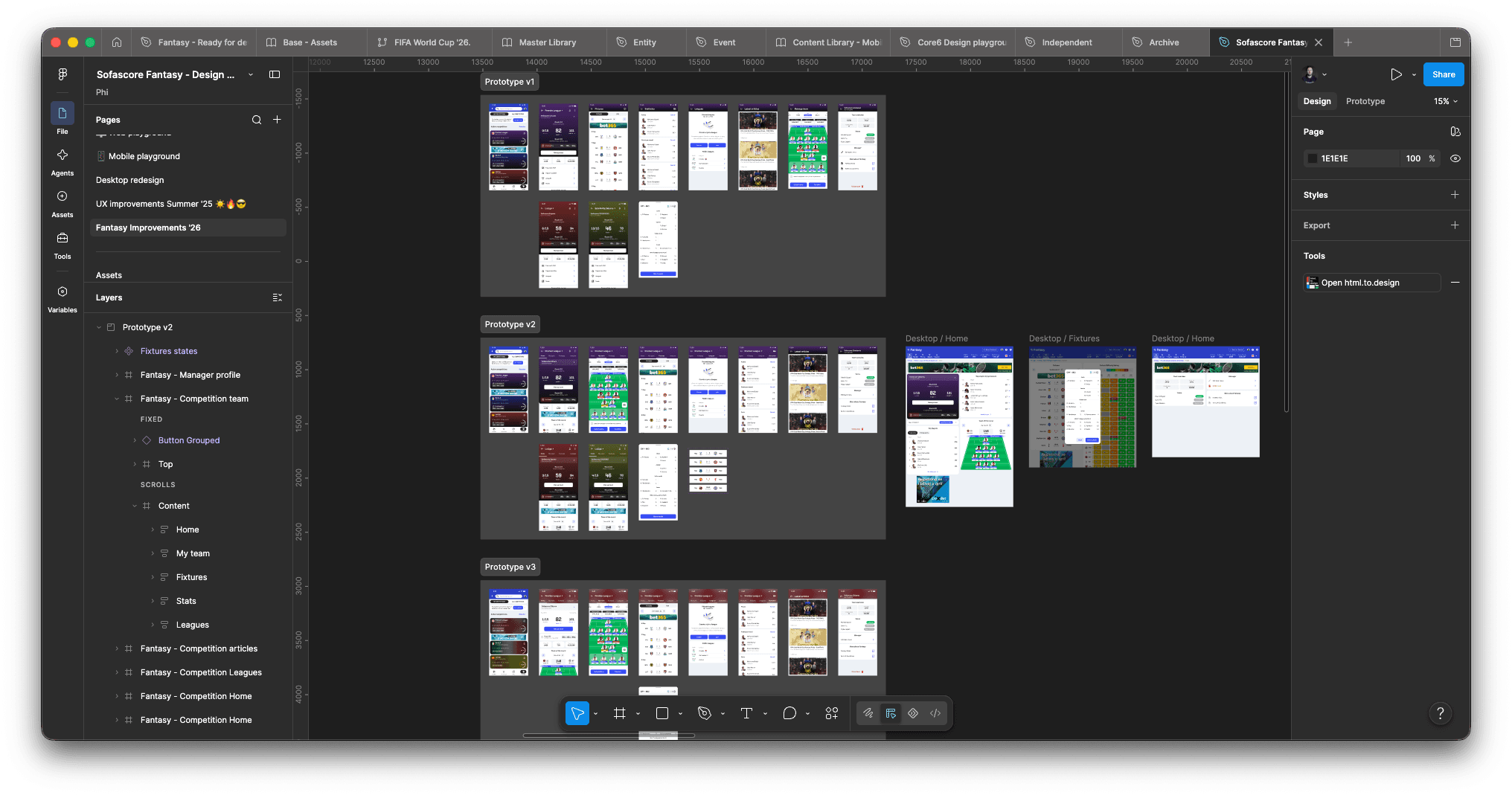
Stable foundation
Continuous refinement
Product continuity
We changed the product when evidence revealed a clearer path, not simply because a newer design looked different.
Reflection
Decision clarity
Product reality
Continuous learning
The best solution is rarely the most ambitious one.It is the one users, product and engineering can successfully build together.
Final reflection