01
Growing ecosystem
More sports, formats, creators and content sources entered the product.
Case study 03
Sofascore · Feed
Sofascore Feed
I led the design of Sofascore Feed from beta through global rollout, partnering with Product and Engineering to evolve it into a main-navigation destination.
The challenge was to bring news, video, social content, match context and data-driven sports stories into one coherent experience without overwhelming the user.
Ownership
Feed structure, content formats and interactions
Delivery status
Shipped · Live on iOS and Android
Product evolution
Expanded from beta into Sofascore’s global main navigation
The opportunity
As Sofascore expanded its coverage of news, video, social content and data-driven stories, the volume of available content grew rapidly.
Feed created one destination where that content could be prioritised, personalised and presented in a way users could quickly understand.
01
More sports, formats, creators and content sources entered the product.
02
Users needed to recognise relevance without opening every story.
03
Sofascore could combine behavioural signals, regional context and proprietary sports data inside one discovery experience.
The product needed to transform a growing content supplyinto a clear and continuously relevant discovery experience.
Discovery model
Feed combined personal interest, collective momentum and local identity instead of relying on one generic recommendation stream.
As the amount of content increased, another question became equally important: how do we keep the Feed varied enough to remain interesting while users continue scrolling?
Personal relevance
Collective momentum
Local identity
Feed rhythm
Evolving model
Discovery changed as the product matured.
The global launch introduced For You, Popular and Country. The structure continued evolving as recommendation logic, content coverage and user needs developed over time.
The question was no longer only “What is relevant?”It was also “What should the user see next?”
The Feed in motion
Feed needed to support very different content rhythms - from fast match updates and short clips to editorial stories and deep sports-data visualisations.
Each format needed enough identity to feel useful, while still belonging to one consistent discovery experience.
Personalised entry
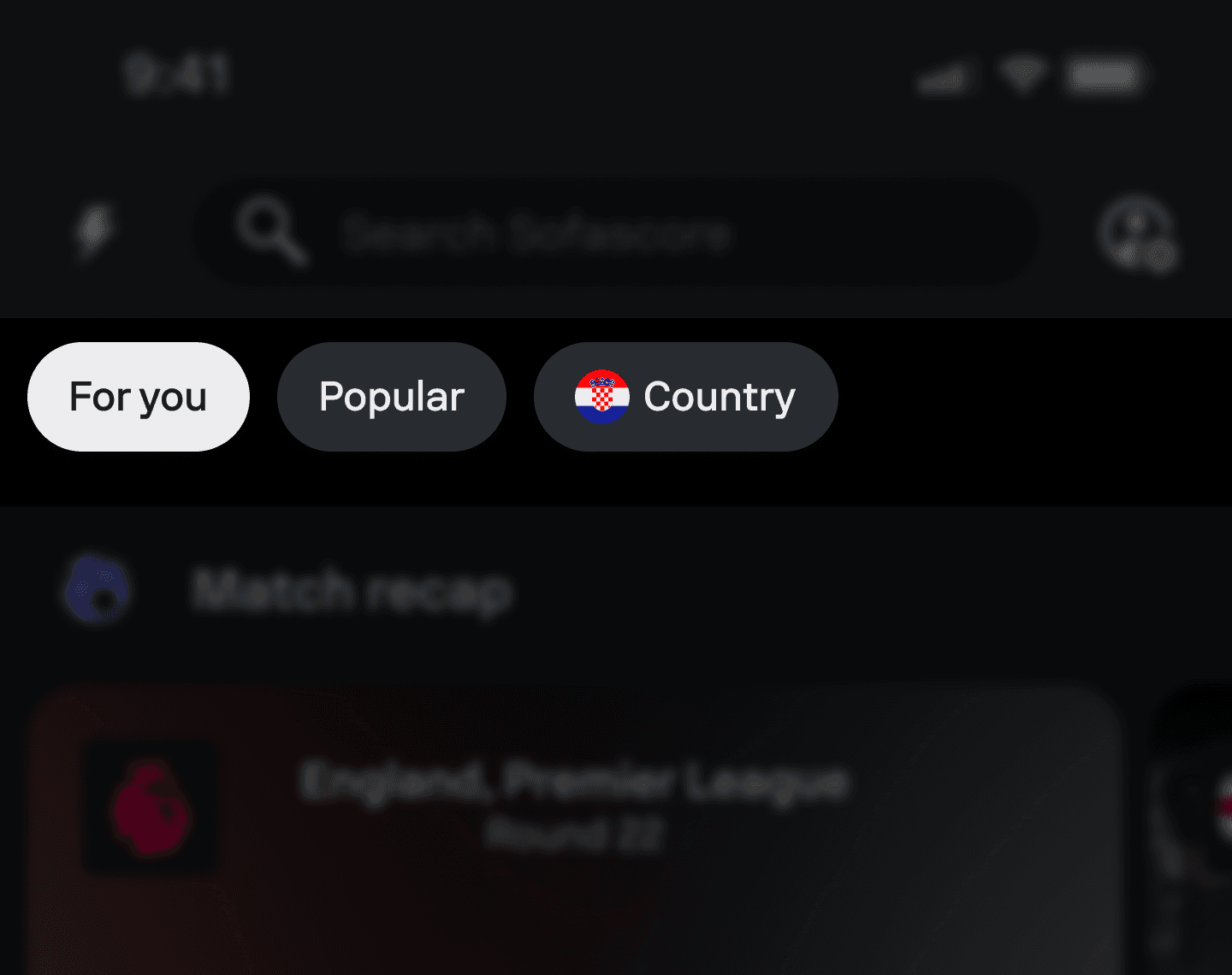
For You, Popular and Country let users move between personal relevance, regional momentum and local context.
Match context
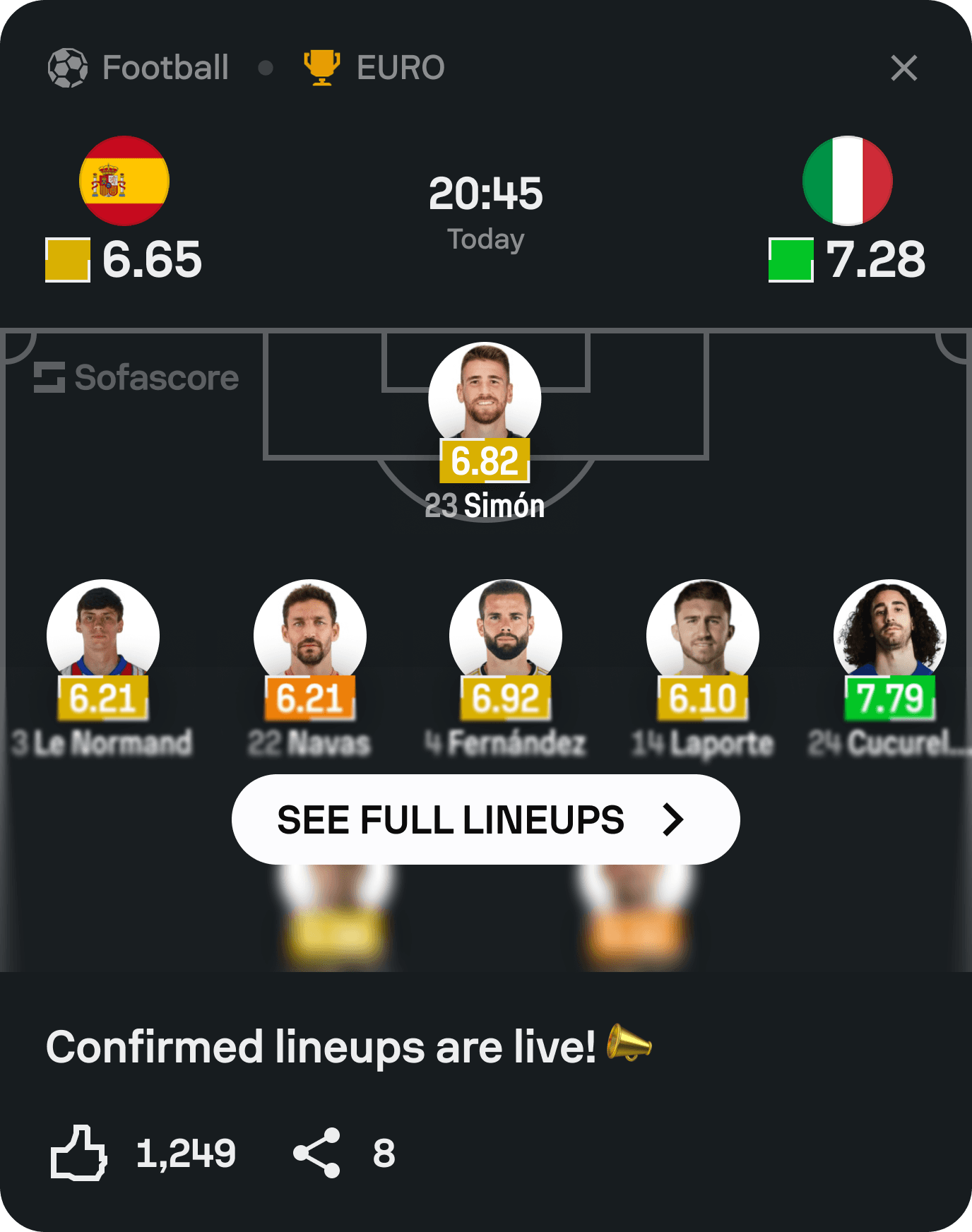
Match and player formats brought timely context into the Feed before, during and after events, creating immediate paths back into the live sports experience.
Social storytelling
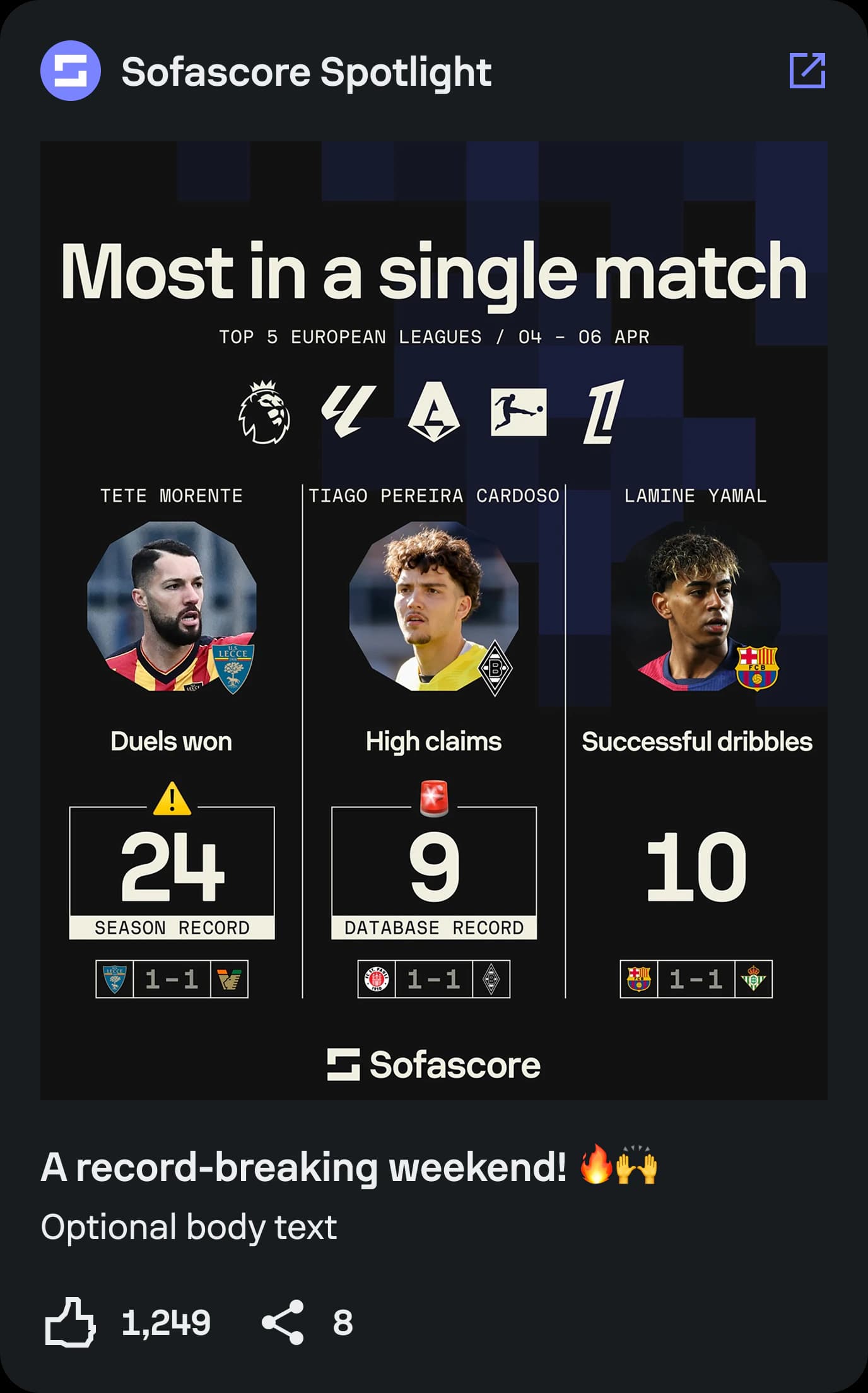
Sofascore Spotlight brought social and editorial storytelling into the app while preserving the visual language and interaction rhythm of the Feed.
Video discovery

Videos for You, Clips You Might Like and Creator Spotlight supported both longer viewing sessions and lightweight short-form discovery.
Editorial discovery
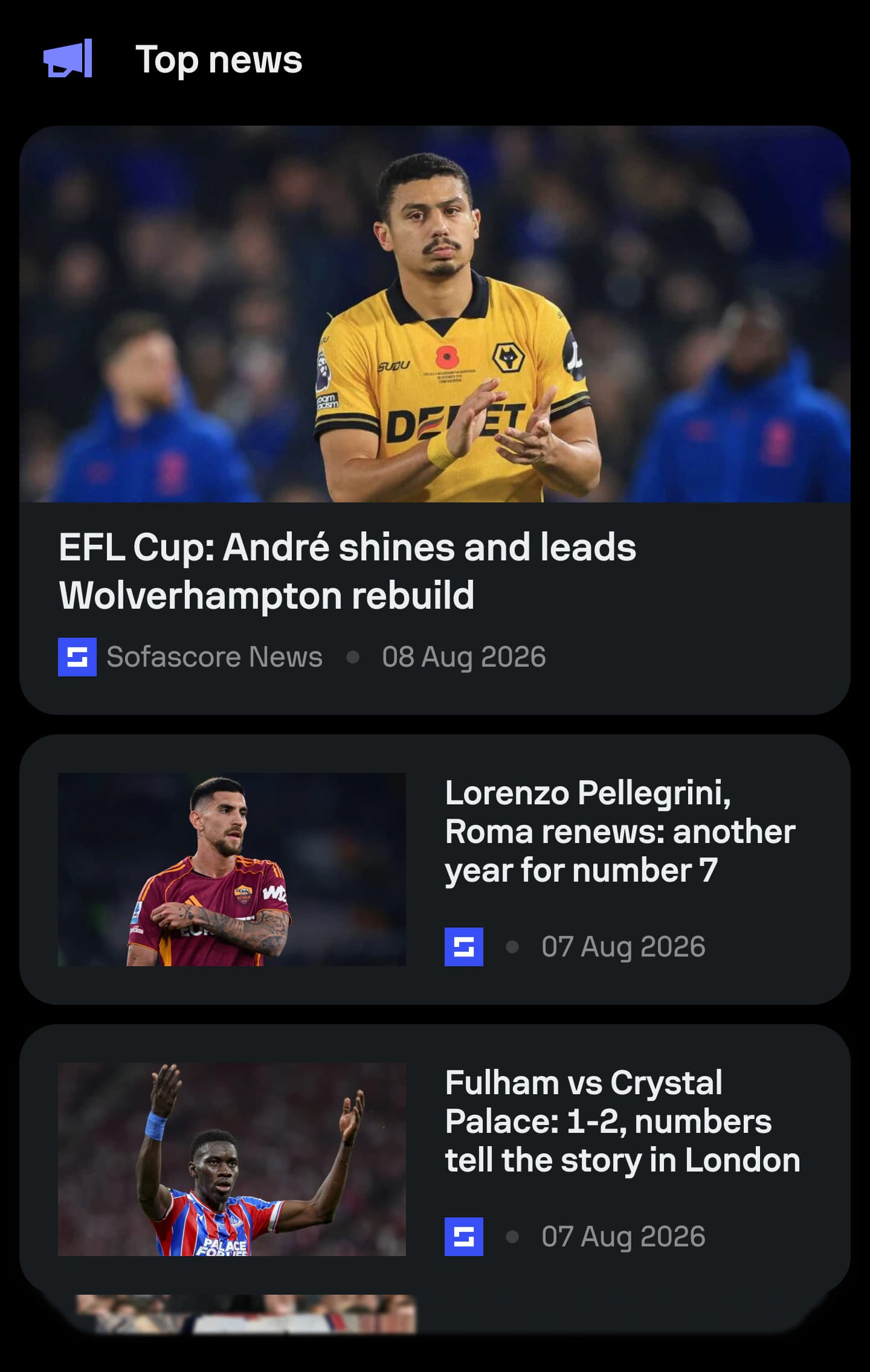
Top News and interest-based stories introduced broader sports coverage without disconnecting it from the user's existing preferences.
Data as content
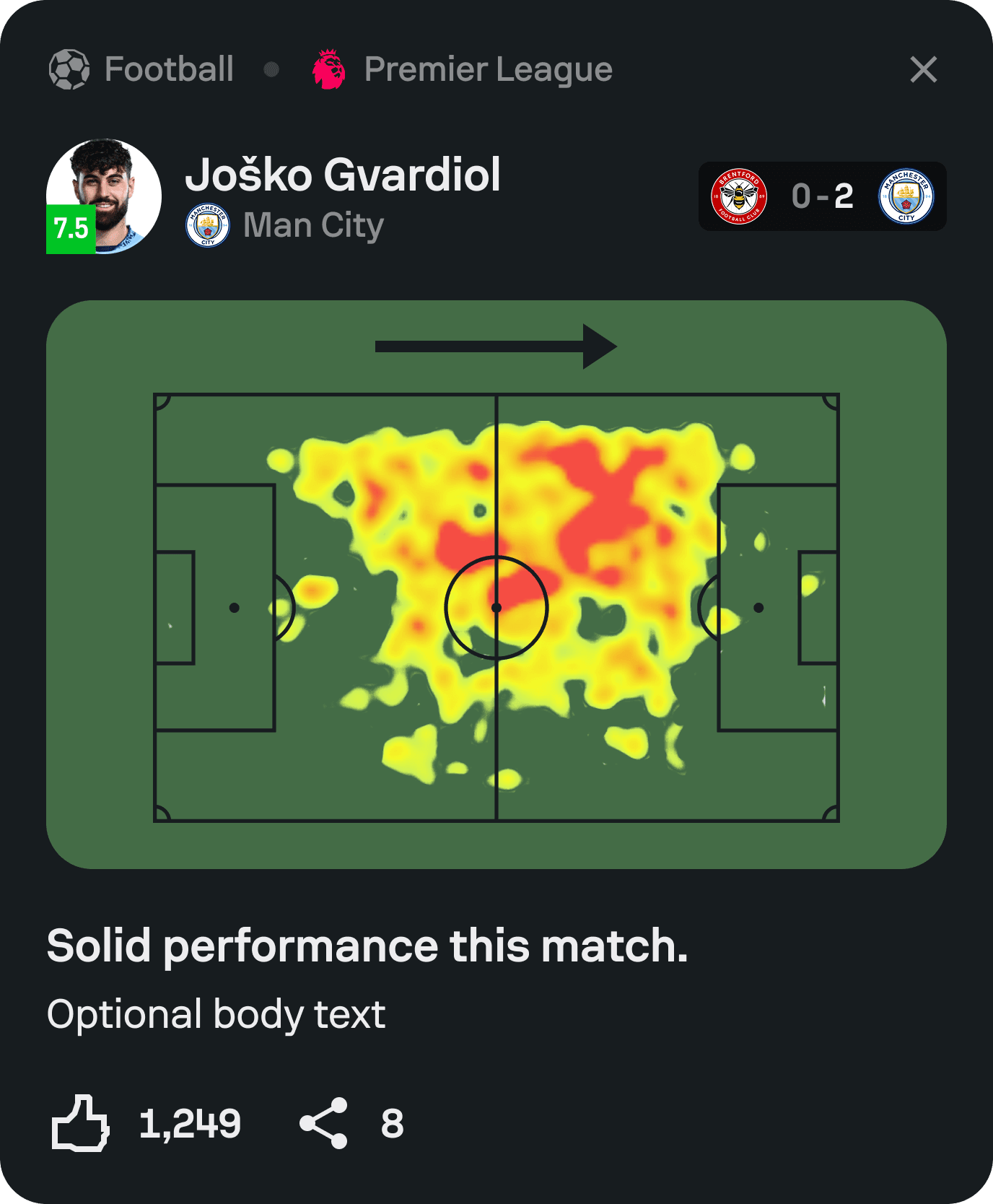
Player performances, ratings, charts, maps and sport-specific insights transformed proprietary sports data into content users could immediately understand.
Swipe through experience
Key takeaway
Feed was not one repeated card. It was a system for many different reasons to stop, understand and continue exploring.
Content system
The guided experience shows the Feed from the user's perspective. Underneath it, the design challenge was creating a reusable framework capable of supporting very different kinds of sports content.
Match context, editorial stories, video and sport-specific data needed enough freedom to behave differently while still sharing a recognisable hierarchy and interaction rhythm.
System principle
Shared structure.Different content behaviours.
Common spacing, metadata, interaction patterns and visual hierarchy kept the Feed coherent. The story itself - imagery, video, event context or Sofascore data - created the variation.
Match & player context
Some Feed formats were closely connected to the live sports experience. They surfaced timely moments before, during and after events and created immediate paths back into match and player context.
3 examples
A high-intent pre-match format that surfaced starting elevens as soon as they became available.
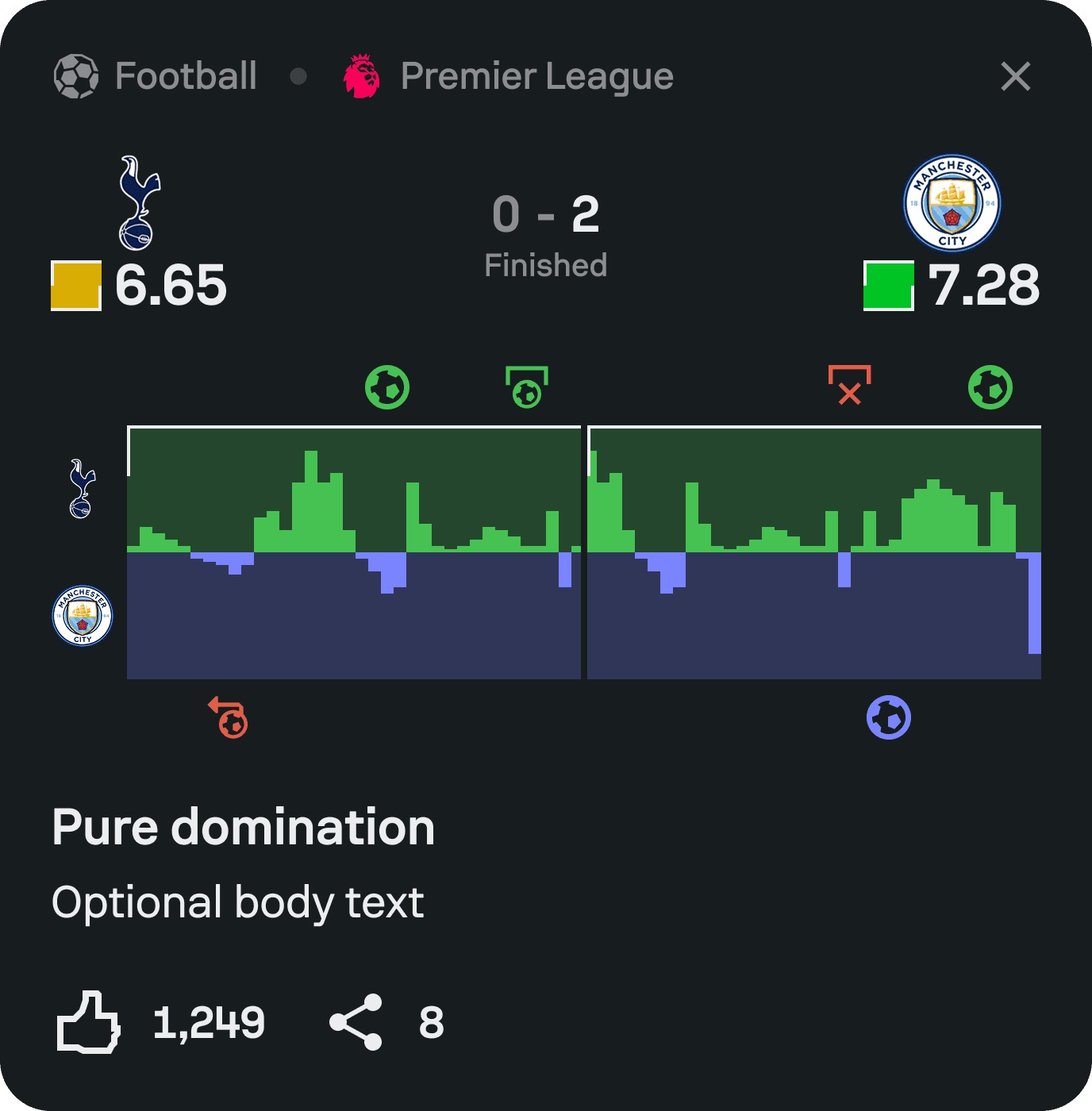
Match flow data transformed the balance of an event into a visual story that could be understood directly from the Feed.
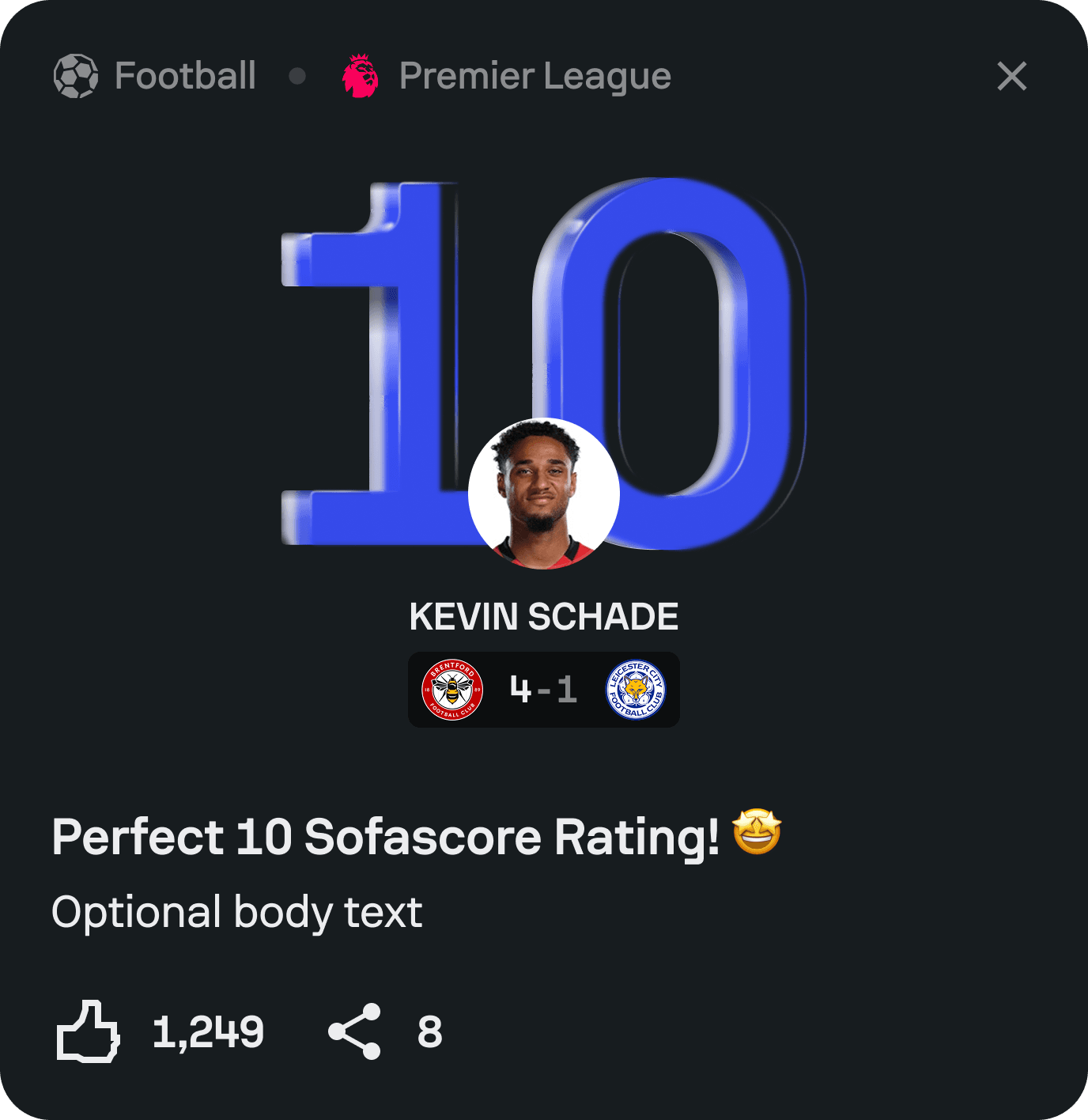
A standout-performance format built around one of the strongest signals in Sofascore: the rare 10.0 rating.
Swipe through examples
Editorial & social
Feed also became a place for broader sports storytelling. Editorial coverage, personalised news and branded social formats introduced different reasons to explore without leaving the Sofascore experience.
3 examples
A clear editorial hierarchy combined a leading story with secondary news for lightweight browsing.
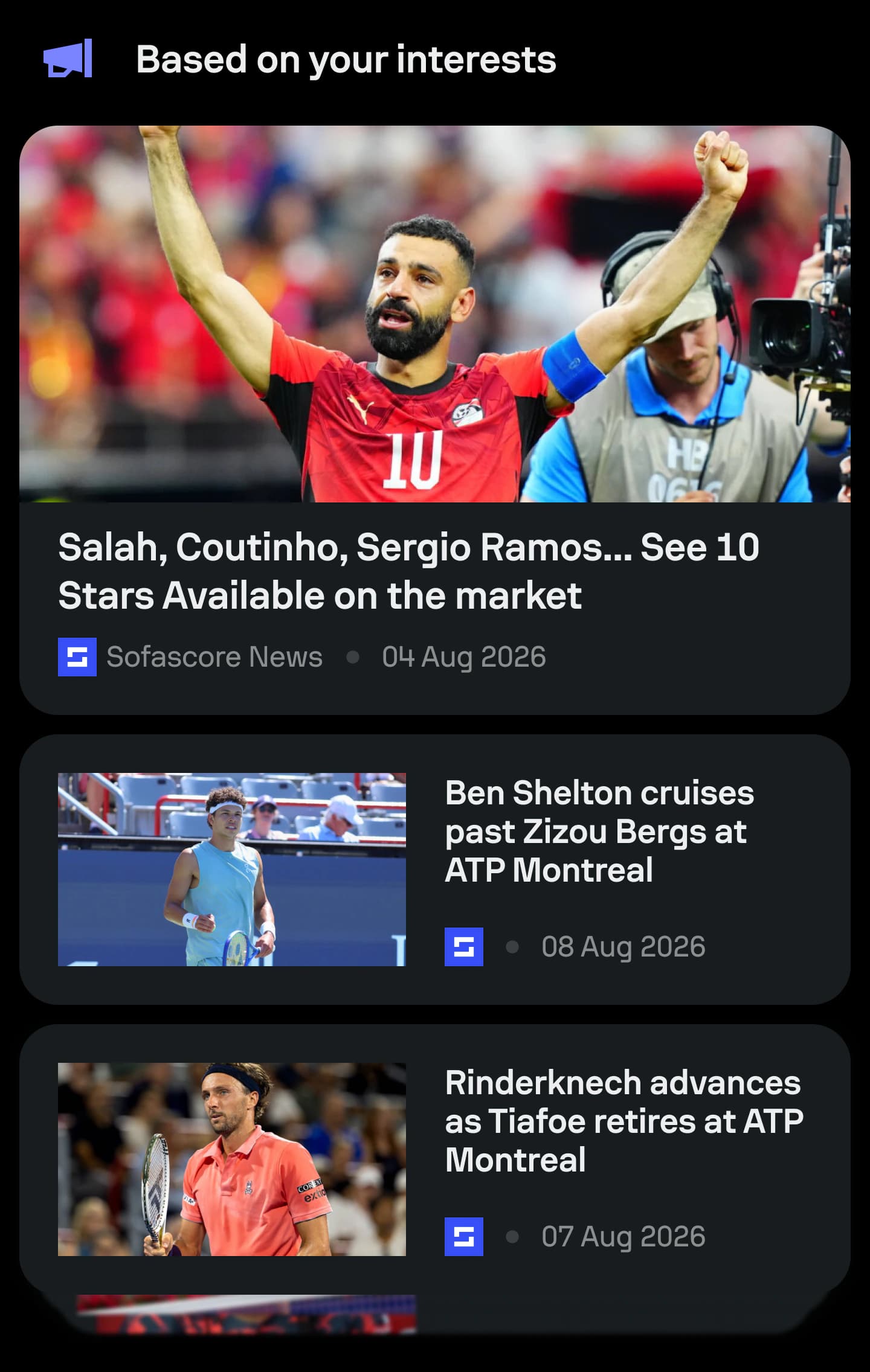
News recommendations connected broader editorial coverage with the teams, players and sports relevant to each user.
A more expressive branded format brought social-first storytelling and standout performances directly into the app.
Swipe through examples
Video & creators
Video required more than one template. The system needed to work for traditional clips, short-form discovery and creator-led content while preserving a familiar Feed rhythm.
3 examples
Larger video cards supported longer-form viewing and prominent stories from teams, leagues and other sources.
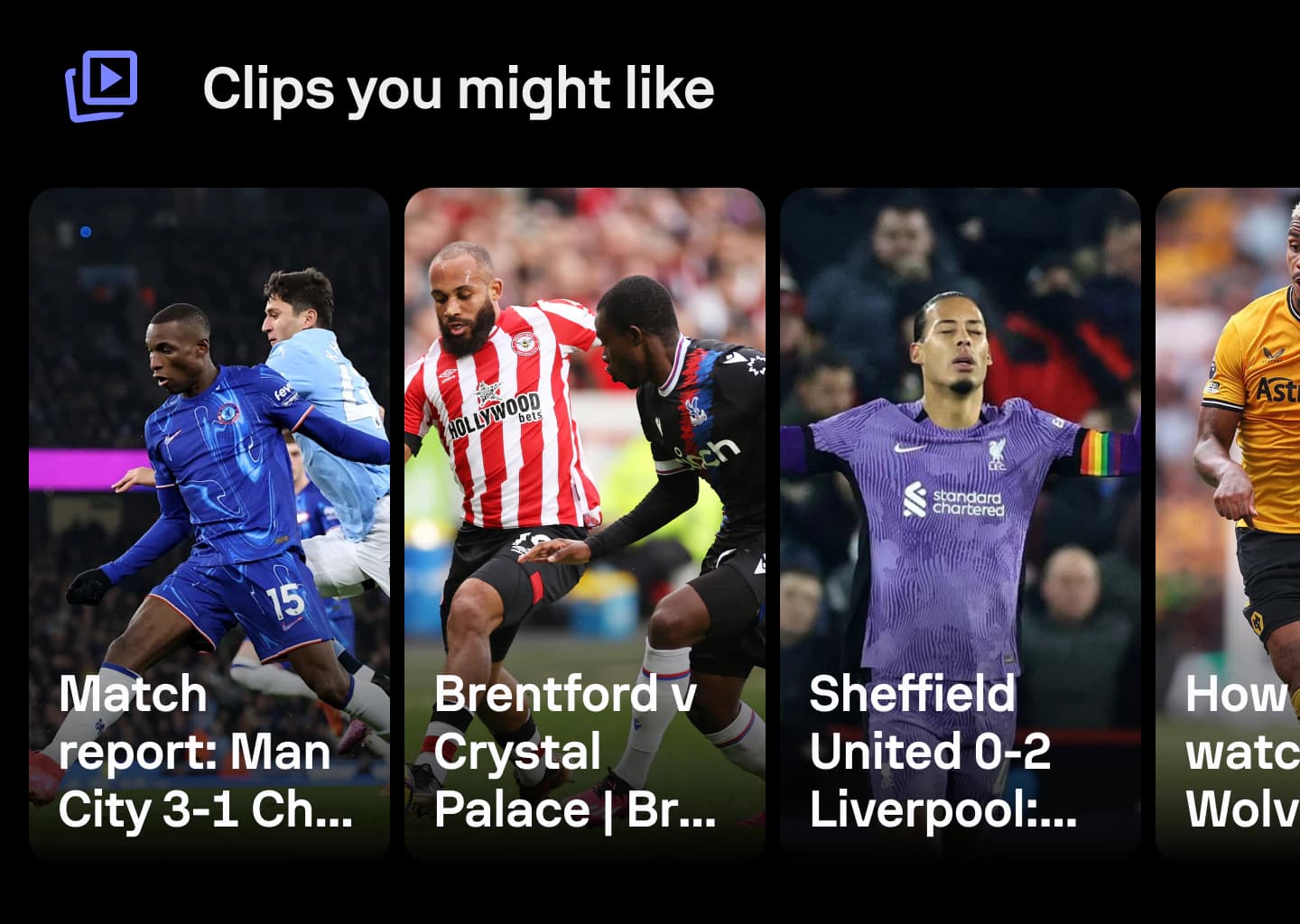
A horizontal short-form rail created a faster, lighter video discovery pattern inside the same Feed.
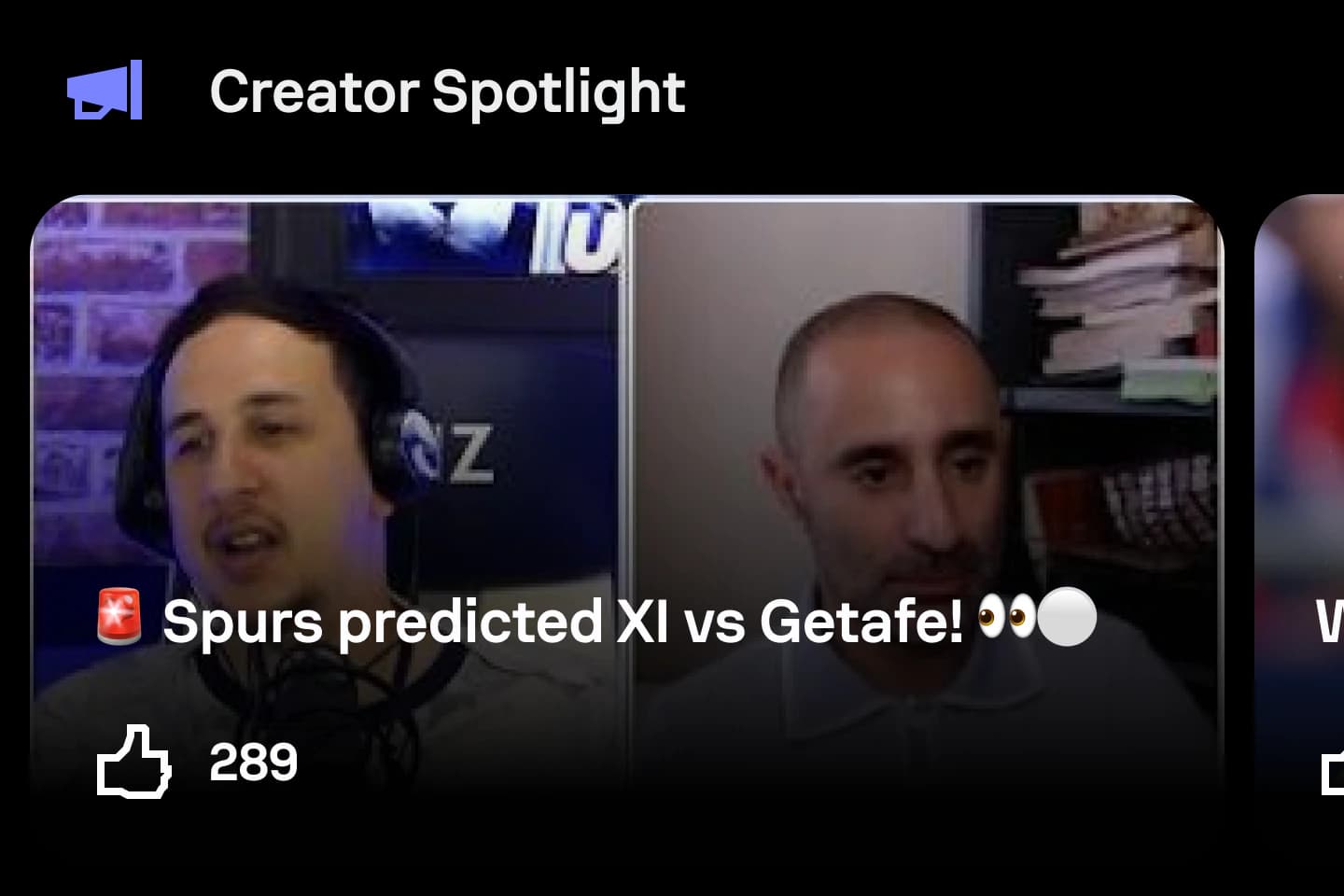
Creator-led content expanded the experience beyond traditional sports media and introduced more personality-driven stories.
Swipe through examples
Data-driven stories
Some of the most distinctive Feed formats came directly from Sofascore's sports data. Each sport required a different visual language, but the surrounding card system needed to remain coherent.
3 examples
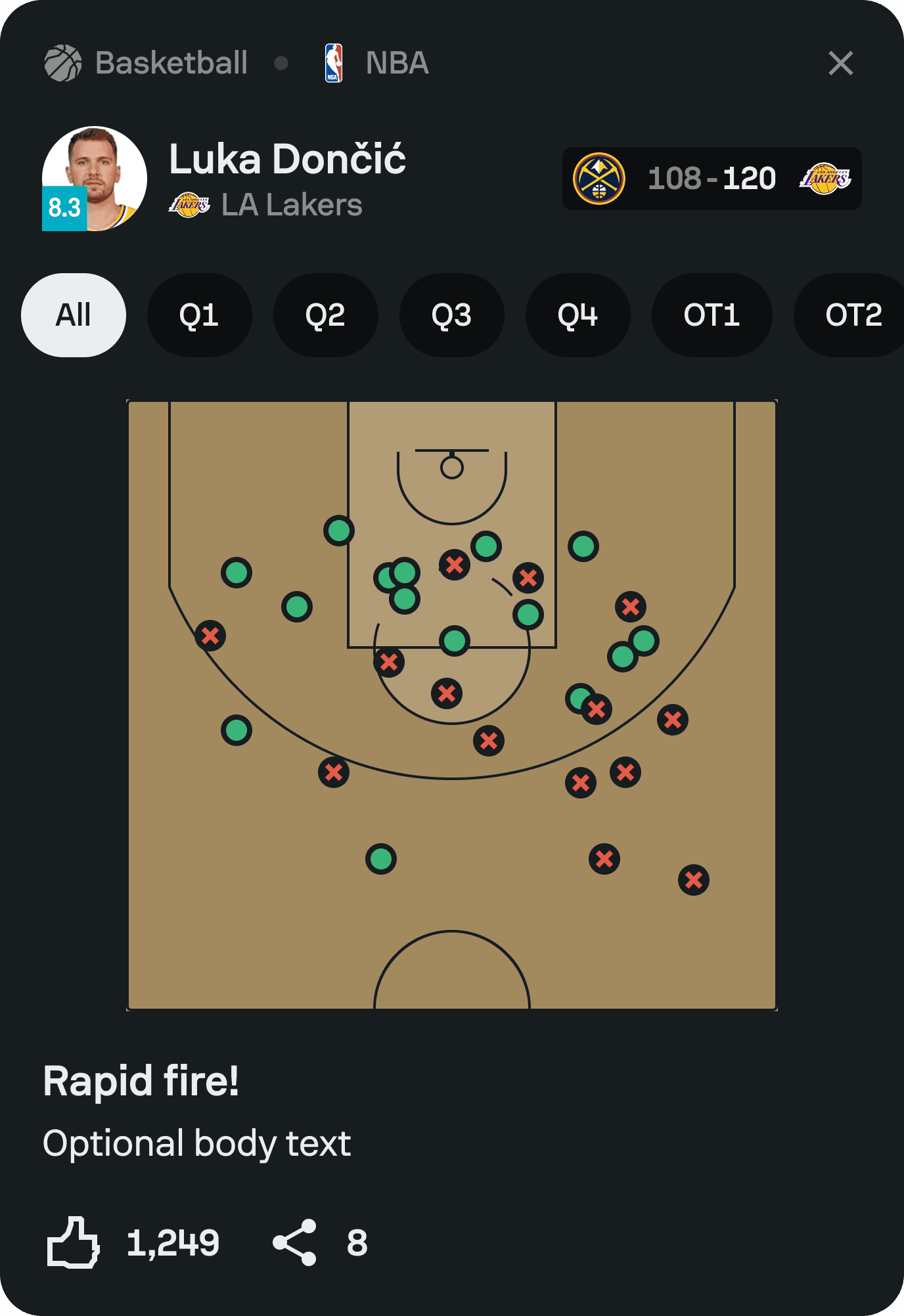
Detailed basketball event data became a self-contained visual story without requiring users to open the full match page first.
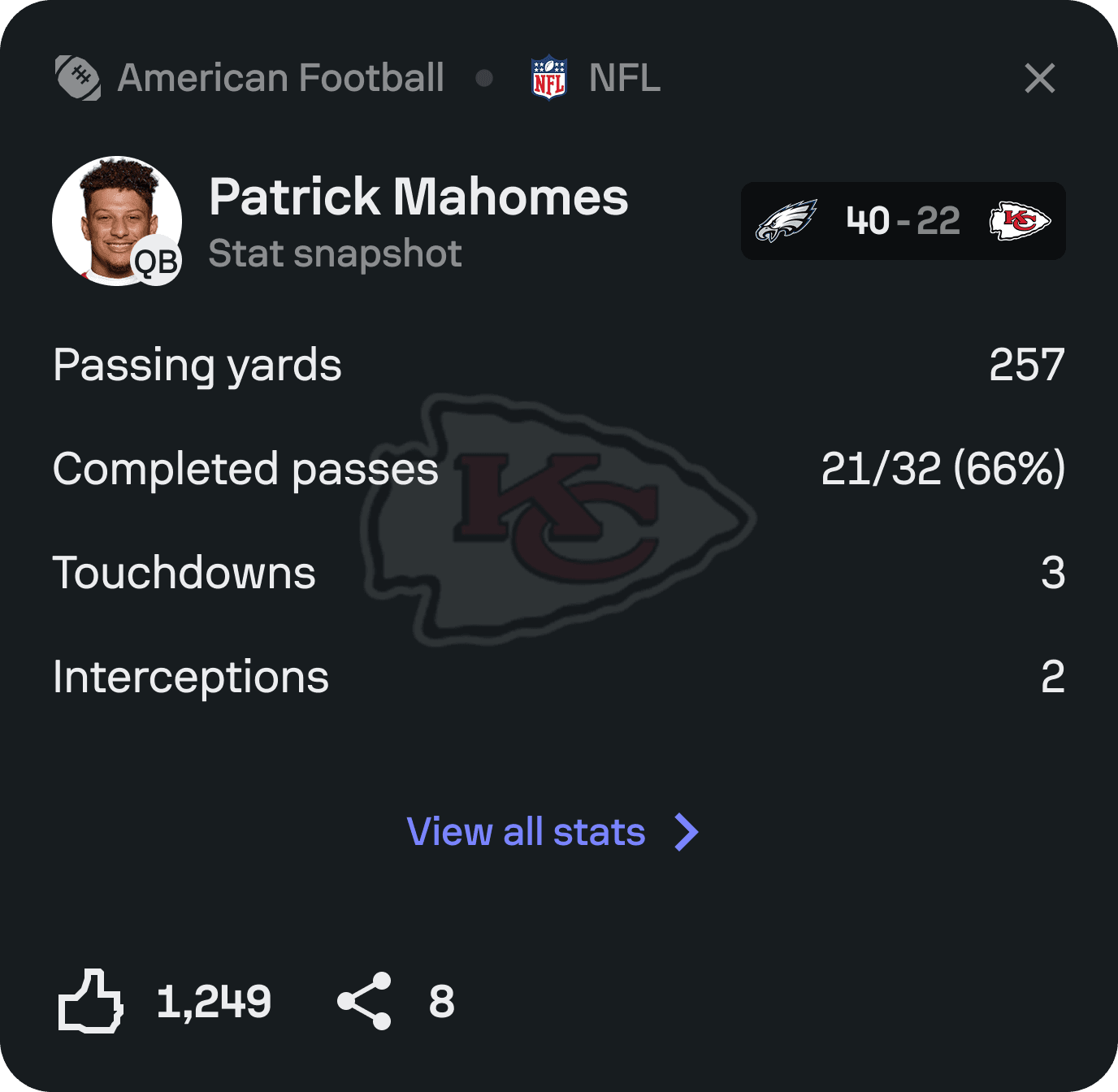
A compact player summary surfaced the most meaningful American football statistics in an immediately readable format.
Positional data gave individual performances another visual dimension, turning player movement into a self-contained post-match insight.
Swipe through examples
The system did not make every story look the same.It made very different stories feel like they belonged in the same product.
Card evolution
One recurring challenge was finding the right balance between visual richness and fast scanning. Event stack cards went through several iterations as we refined what deserved the most attention.
The direction gradually moved away from heavier custom treatments toward a calmer structure where the match itself could carry the story.
Early concept
The first direction explored a richer editorial treatment, combining the match result with supporting content, stronger visual styling and a prominent call to action.
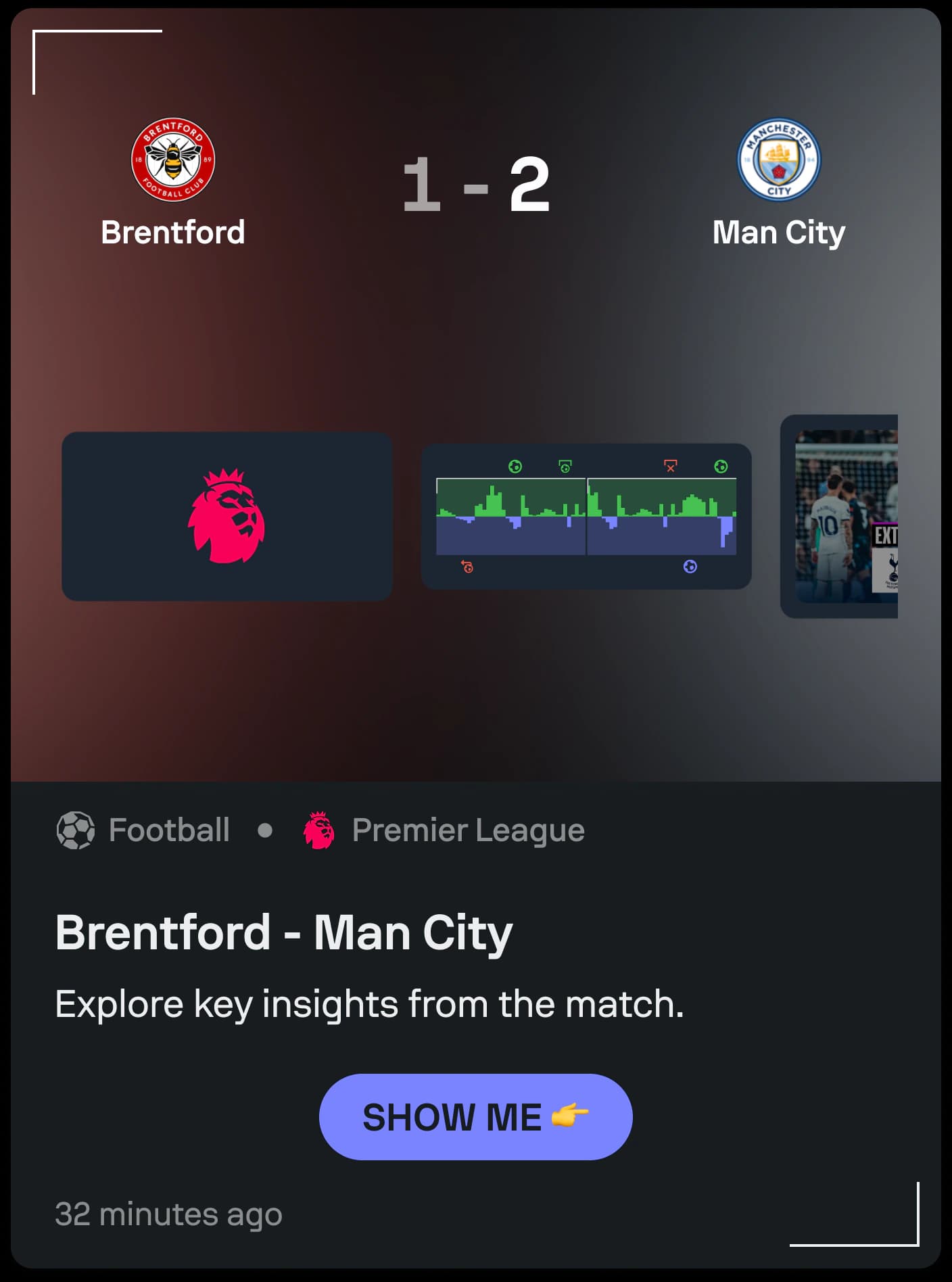
Event stack card
Exploration
Refinement
The next iteration simplified the composition and made the match itself the primary story. Competition, result and status became easier to identify.
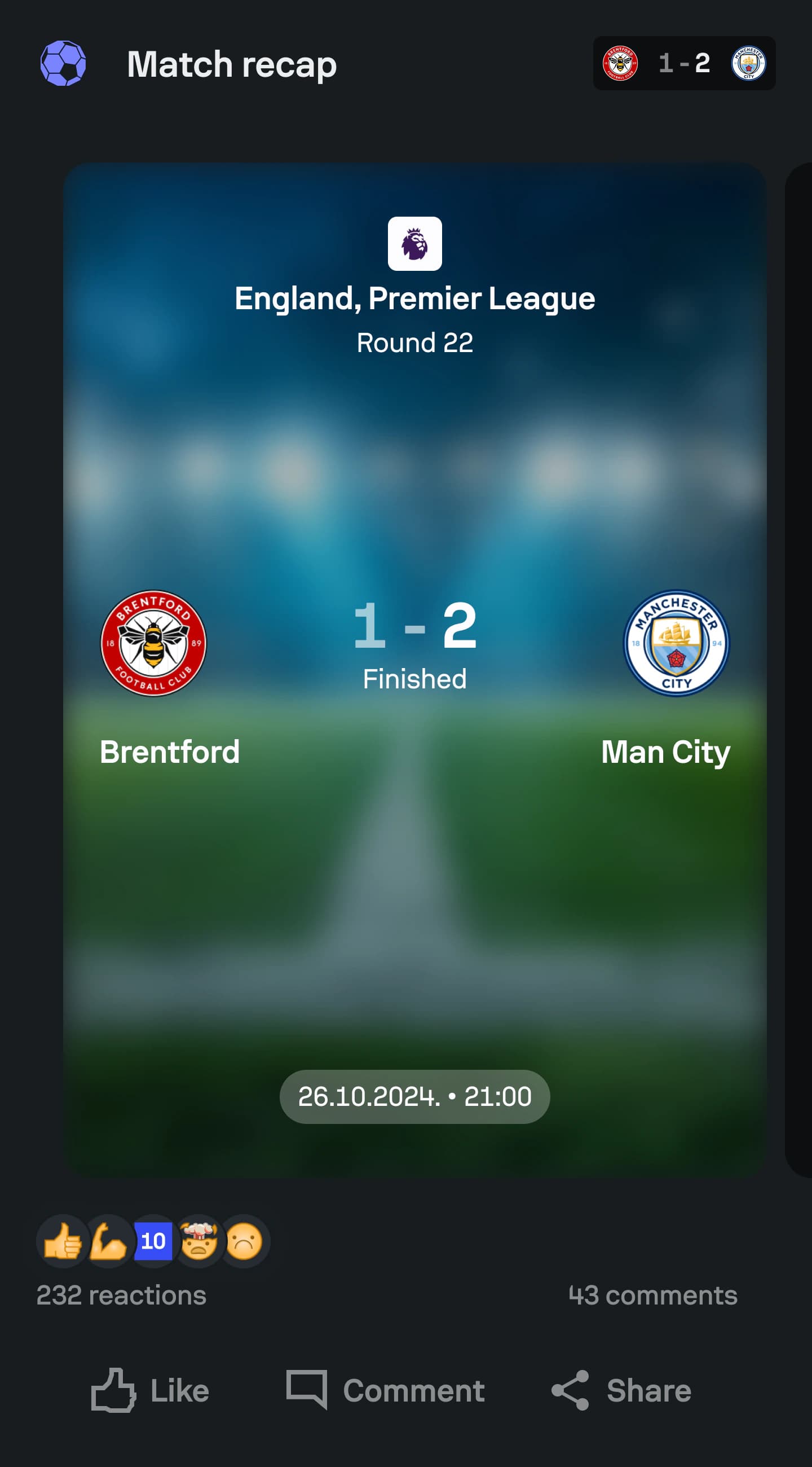
Event stack card
Iteration
Final direction
Current production
The production version reduced visual noise and focused the hierarchy on the match context users needed most while scrolling.
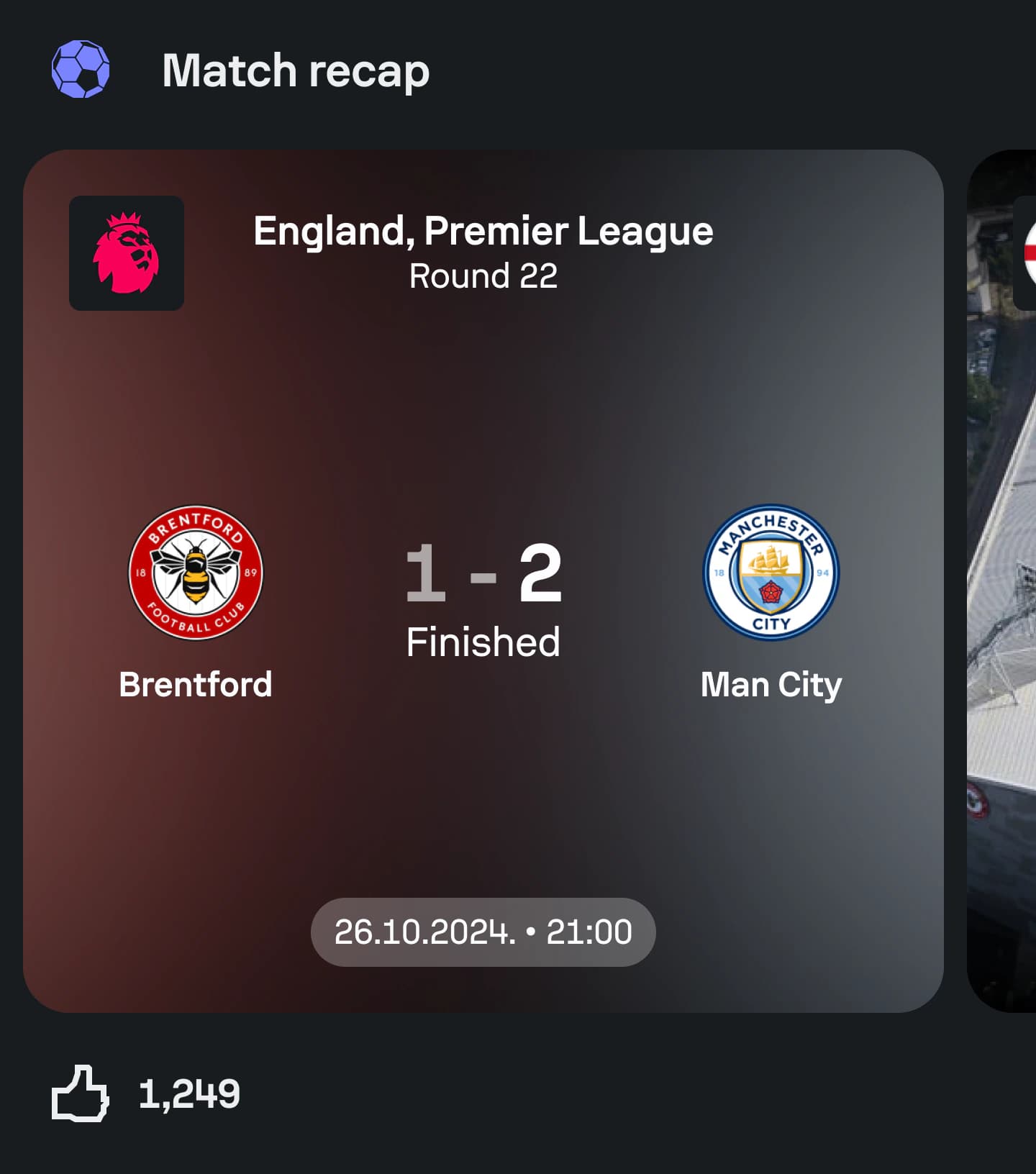
Event stack card
Production
Swipe through iterations
The design shift
Less visual weight.Faster understanding.
The goal was not to simplify the card for the sake of minimalism. It was to reduce everything that competed with the match itself, allowing users to recognise context and outcome faster while moving through the Feed.
Product evolution
The experience did not move from one completed concept directly into production. It developed through staged rollout, recommendation experiments and continuous iteration.
As the audience and amount of content grew, the same foundation had to support changing recommendation logic, new sports and increasingly diverse content formats.
Beta phase
The first Feed structure and card models evolved through close collaboration with the Product Owner, design critique and implementation feedback.
December 2024
Feed became available to users with English as their app language, while recommendation sorting and regional-event logic started shaping discovery.
June 2025
Feed expanded to users worldwide and introduced distinct discovery paths around personal relevance, regional momentum and local context.
Ongoing
Machine-learning testing, new content sources, additional sports and new card formats continue to shape the experience.
Making decisions
I prepared selected card variants for testing and refined directions through behavioural signals, feedback and product discussions.
Not every decision produced a clear numerical winner. In those cases, the team still needed to make a deliberate product choice and continue learning from the result.
Outcome
Feed grew from a staged rollout into a globally available product with a permanent place in Sofascore's main mobile navigation.
Just as importantly, the work established a flexible foundation that could continue evolving as content coverage, sports and recommendation logic expanded.
Global reach
Core destination
Scalable foundation
The lasting outcome
Not a finished collection of cards.A system designed for change.
New formats could be added without losing the visual hierarchy, interaction patterns and product identity that made Feed feel coherent as one experience.
Reflection
Feed reinforced that designing discovery is less about finding one perfect interface and more about creating a system that can remain understandable while the product around it keeps changing.
System thinking
Decision making
Continuous change
Personalisation is not only about ranking the right content.It is about making its relevance immediately understandable.
